
Building Bridges through Jazz: Rethinking Jazz Diplomacy in a Twenty-First Century World
Click here to view and download this article as a printable pdf. Ryan Molloy (Aomori, 2018-2022)
Synopsis
At the height of the Cold War, the most influential practitioners of jazz—America’s greatest art form—travelled across the world as the most effective ambassadors for American culture. These tours of places like Iran and the Soviet Union were one of the many instruments the U.S. Department of State utilized to project soft power and build ties with people on both sides of the Cold War divide. At their core, these tours propagated American values into places where ideologies competed vigorously for the fate of continents. In modern times, both Japan and the United States are home to thriving jazz scenes, but neither country fully embraces the potential for this art form to bolster U.S.-Japan relations.
At a time when both nations are dealing with forces pushing for ethnonationalist policies, we should not neglect embracing more modern forms of cultural exchange to foster stronger links between artistic communities and the general public in both nations. It is wise to embrace modern forms of cultural exchange. This article discusses the history of the Jazz Ambassadors initiative while synchronizing it with my own personal experiences as a jazz musician on the JET Programme before arguing for why both countries should increase support for the arts in order to retain strong diplomatic and cultural ties.
The original Jazz Ambassadors program was one of the longest running state-sponsored efforts to both promote American culture and counter negative narratives regarding the frictions inherent in American society. First initiated under President Eisenhower in the lull between the Korean and Vietnam Wars, the program continued under the purview of the U.S. Department of State for decades, though in a diminished form, despite the end of the Cold War. [1] The spirit that infused this program continues to highlight American culture at its best on the world stage. At its conception, the Jazz Ambassadors program was organized around the bands of some of the greatest composers to come out of the United States during the twentieth century. Bandleaders such as Duke Ellington, Benny Goodman, and Louis Armstrong toured the Soviet Union, Iran, and the country of Georgia in order to promote a side of American culture that most inhabitants in these countries knew little about. [2] Due to the repressive policies regarding international travel imposed by the governments of the beforementioned states, these concerts were one of the few ways an average person could see and humanize citizens across the Cold War divide. A revival of the groundbreaking Jazz Ambassadors program would benefit U.S.-Japan relations.
A History of U.S.-Japan Exchange Through Jazz
While originating on the far side of the Pacific, jazz has a long and storied history in Japan. In the 1920s during the era of Taisho democracy, jazz was seen as the quintessential music of modernity that fit the spirit of the times. Despite wartime suppression, jazz flourished in post-World War II Japan due to the lifting of censorship and prolonged contact with members of the African American community stationed there. E. Taylor Atkins’s book Blue Nippon [3] provides an outstanding introduction to the social and political history of jazz in Japan during the twentieth century. Japan remains home to a thriving jazz scene, and a large contingent of Japanese jazz musicians are active throughout the United States in places like New York today.
Several historical cases of individual musicians and groups illustrate deep cultural collaboration between jazz communities in these two nations. In particular, the lives and careers of Art Blakey and Toshiko Akiyoshi give clear insight into the cultural milieu of the postwar era.
Most famous for being the leader of the Jazz Messengers, Art Blakey’s life provides a vivid look at the intersection between jazz, U.S.-Japan relations, the Civil Rights Movement, and beyond. When Blakey and his band first arrived in Japan in 1961, they were greeted at the airport with a scene more reminiscent of Beatlemania than a jazz quintet. Thousands of fans waited to get a glimpse of the group whose records they knew so well. [4] At a time when Jim Crow laws prevented the band from being welcomed in large parts of their own country, this event shows just how deep the enthusiasm for the music and its performers was in Japan at the time. Eventually, members of the Japanese jazz scene, including bassist Isao Suzuki, would join Blakey on the bandstand as full-time members of the group. The trip would result in one of the most important live albums in the jazz canon as well as the continuation of near yearly trips to Japan for the following thirty years.
Another aspect of the first Jazz Messengers trip worth examining involves the saxophonist Wayne Shorter. While he is regarded as a seminal figure of jazz history, equally renowned for his compositions as well as his performances, one aspect of his life draws attention to a different sort of cultural connection. Shorter was perhaps the first jazz musician of significant note to convert to Buddhism, specifically the Nichiren branch, whose adherents follow the teachings of the thirteenth-century eponymous monk. Throughout Shorter’s career, his openness to discussing aspects of this belief system led to its dissemination through the musicians he collaborated with, including the likes of Herbie Hancock and Buster Williams. [5] While a number of other musicians drew inspiration from Buddhism, which they may have first encountered within a Japanese context, the importance of this phenomenon shows that the cultural exchange was a two-way street, meaning that influence flowed between these two cultures, and that jazz has an ability to disseminate aspects of culture beyond the artistic realm.
Another musician whose life exemplifies how jazz has the ability to link both of these cultures is the pianist Toshiko Akiyoshi. Born in Japanese-occupied Manchuria, in the 1950s, she became the first Japanese student to study at the Berklee College of Music. [6] At a time when the average American’s knowledge of Japan was limited to the Second World War and its aftermath, this was no small accomplishment, especially considering how predominantly male jazz was in the 1950s. Her self-described “strange” status as both Japanese and a woman fostered a large degree of press interest, resulting in several television performances and newspaper editorials. As a long-time resident of New York City, she became well known for her weekly big band residency, which often featured original compositions that incorporated a wide array of traditional Japanese instruments. [7] Her career in music reflected the transformation of relations between these two countries in the second half of the twentieth century.
As an aside, one factor often overlooked at the intersection between U.S.-Japan relations, jazz, and the Civil Rights Movement is how often jazz musicians led the way in establishing not only cultural ties between the two nations, but also marital ties. Though it is often easy to forget, interracial marriage was not legal at the federal level in the United States until the 1967 Loving v. Virginia court decision. All three of the musicians mentioned above, at some point in their lives, married a person from the corresponding culture despite the social and legal taboos at the time. [8] From this, we can conclude that jazz musicians are often at the forefront of pushing cultural boundaries in a more positive, humanistic direction.
The Relevance of Jazz Exchange for U.S.-Japan Relations
Both Japan and the United States maintain strong domestic artistic scenes with numerous links between them. While many of these links have developed from grassroots exchange, they now need to be fostered with more top-down support. Of course, while the Jazz Ambassadors program was regarded as an effective promoter of American soft power during a time of hegemonic competition, it is worth asking why a program originally utilized to combat Cold War propaganda would be relevant today between countries that maintain strong ties. The reasons why such endeavors should be supported become clear when examining both modern domestic politics and the U.S.-Japan relationship, showing how a modern revival of the program holds great potential to continue promoting global ties. In fact, in an era where great power conflict is becoming more likely, shoring up cultural ties between Japanese and U.S. citizens is of growing importance.
While postwar tensions between the United States and Japan have historically fluctuated, the present day provides a host of contemporary issues that, if left unaddressed, would lead to a long-term souring of relations. Domestically, both nations are experiencing resurgent nationalist political movements, which are easily defined by the slogan they both share: either “America first” or “Japan first.” [9] It is not hard to see how the continuation of this brand of politics could lead to an increase in xenophobic sentiments and heightened skepticism of international partners. At the same time, trade relations between the two countries have been strained, and this seems likely to continue for the remainder of the Trump presidency, due to the on-again, off-again nature of the administration’s tariff policy. [10] These two trends may continue to strain U.S.-Japan relations, making preemptive action advisable to shore up relations.
Why Jazz?
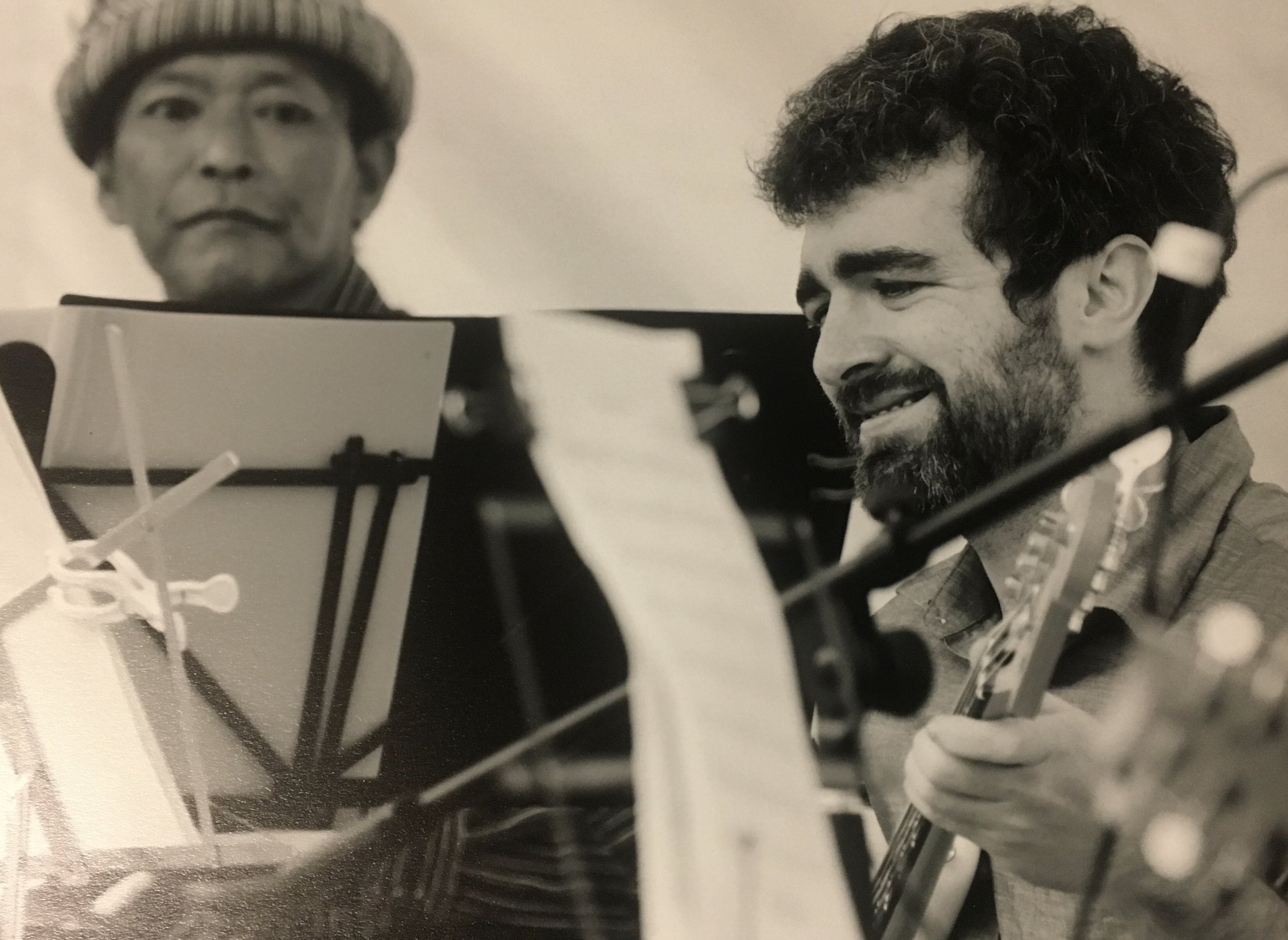
Ryan Molloy in the foreground playing at the 2019 Sotogohama Jazz Festival.
While cultural exchanges through the arts have a long history, jazz has several features that make it uniquely well-equipped to accomplish the primary goals of artistic exchange. One of these features is that jazz as a genre has a long tradition of collaboration and fluidity in band personnel. Unlike rock or other pop music, the common repertoire that jazz musicians know allows groups to come together quickly and efficiently without the need for extensive administration or rehearsal. Given that any program works within the constraints of time and finances, jazz culture allows more time for performances, masterclasses, and other events compared to other types of music.
In addition, we must also recognize the power that jazz has as America’s prime original art form. As the drummer Kendrick Scott put it during a talk I attended as a high school student, “Just as the drum set is in some ways the most American instrument—combining Armenian cymbals, European snare and bass drums, and African-inspired toms—so, too, is jazz the most inherently American art form.”
In many ways the qualities that make jazz a uniquely powerful form of music are also the qualities that America has been aspiring toward from its own inception, but never quite reached. It is not much of an exaggeration to say that the push for authentic self-fulfillment on the bandstand mirrors the pursuit of life, liberty, and happiness as listed in the preamble of the Declaration of Independence. Meanwhile, American society’s historical melting pot is reflected in the spirit of collaboration and spontaneity during a jazz performance, creating a whole much greater than the simple sum of its parts. While other genres of music embody and represent certain aspects of American culture, no other art form comes close to mirroring the aspirations that lay at the core of the American experiment. As a result, jazz is uniquely qualified to be a representative of the United States on the world stage in the twenty-first century.
The Case for Contemporary Arts
An important prerequisite for utilizing the diplomatic tools of the twentieth century in the twenty-first century is to realize that the state of jazz has changed dramatically since the 1950s and 1960s. With the exception of a notable few, most of the big-name bands that took part in the first iterations of the Jazz Ambassadors program are gone while mainstream jazz has also fallen in popularity. However, these realities would not impact the efficacy of this initiative. Jazz actually remains very popular, but has just shifted into new forms. When we understand jazz in a broader sense, we can see that it is a thoroughly modern music with the potential to reach audiences far beyond people who are already aficionados. Modern jazz musicians are similarly adopting contemporary music for vehicles of improvisation, though the new standards are coming from entirely new forms of media.
For instance, New York’s Japan Society recently hosted a sold-out event highlighting the influence of jazz and other Black American music on Japanese anime. [11] In New York today, a variety of weekly shows and jam sessions are dedicated exclusively to performing tunes from video games and anime through the jazz medium. [12] While hardcore purists might be dismissive of this new material, the attendees at these events come from a wide variety of both musical and cultural backgrounds and seem to be united in the joy these performances bring to them. Music from these genres is known and loved by millions and is a great vehicle for engaging with newer audiences.
While critics of the efficacy of jazz-based cultural exchanges may point to the traditionally niche nature of the genre, the proliferation of these shows and events demonstrates how it is certainly possible to expand the potential audience beyond a traditional base while still maintaining the artistic integrity that makes these genres so unique. A twenty-first century rendition of this program must be willing to meet the audience on their terms rather than adhere too strongly to an orthodox interpretation of what jazz is or isn’t.
JET Musicians as Cultural Ambassadors: Musical Collaboration as a Method of Grassroots Exchange
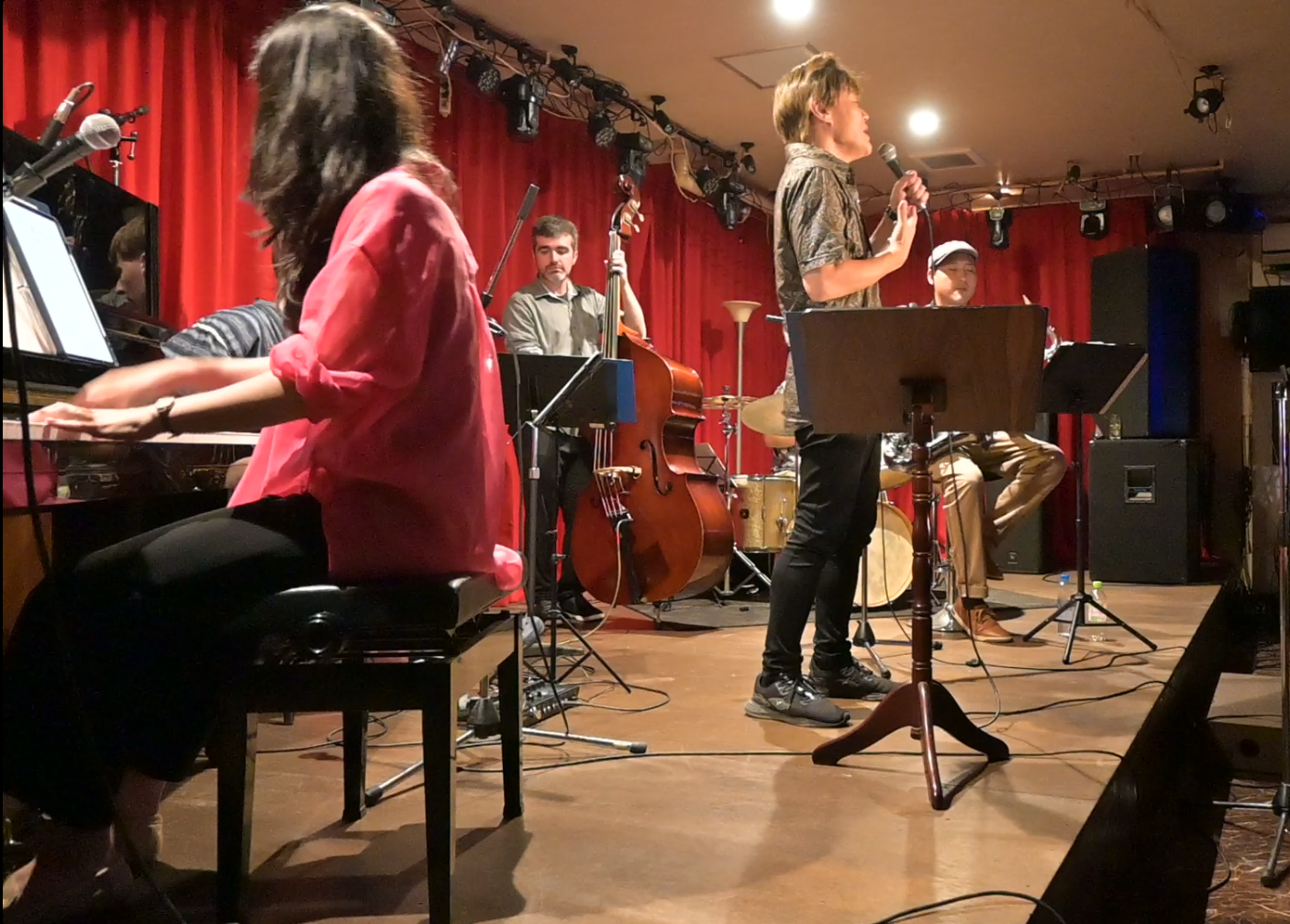
JET alumni performing with local residents in Misawa, Aomori.
During my time on the JET Programme, I was lucky enough to land in a placement with an active local jazz scene. One of the overarching goals of the JET Programme is to increase opportunities for mutual cultural understanding, and participating in the local music scene was easily the most effective way I engaged with members of the public outside my duties to my school. My time playing double bass as a sideman [13] in Aomori allowed me to foster an environment of mutual understanding between me and my Japanese bandmates. Indeed, these interactions eventually grew to include musicians from a wide range of cultural backgrounds, including members from the Vietnamese, Australian, and Korean communities. While the focus of this essay is specifically on U.S.-Japan relations, it would be a mistake to neglect the political, social, and cultural ties that these two nations share with other nations in the greater Pacific region.
During my time in Japan, I attended an event by Swedish and Japanese nationals who were essentially already doing what I argue for in this essay. The Swedish musicians were touring with a Japanese dancer who danced in a traditional style. Chatting with these musicians afterward, I learned that they were being supported by the Swedish government to foster cultural, economic, and political ties between the two nations. This experience shows how much other countries recognize the merits of music as a tool for cultural diplomacy, even in the 2020s.
These ties can be developed and expanded on a much larger scale. If one jazz musician working in a multicultural context can bring further understanding between distinct communities, often despite the presence of a language barrier, then similar results will likely come about if more opportunities for artistic exchange are developed and supported. I want to emphasize here that these types of exchanges should happen in both directions. It is equally necessary for members of the Japanese jazz community to be able to work, teach, and study in the United States as it is for American jazz musicians to do so in Japan.
Current State of the Jazz Ambassadors Program
Currently, there is no Jazz Ambassadors program as the original participants would have recognized it. However, the spirit of the program lives on in at least two separate organizations: the U.S. military and a nonprofit organization called American Voices. While these organizations both have distinct advantages that work in their favor, they also carry significant baggage, limiting their ability to foster ties between these two nations.
To take the U.S. military first, their premier army big band seems to claim a direct descent from the original Jazz Ambassadors program, even claiming the title “The Jazz Ambassadors.” While their official website claims that their goals are very similar to those of the original program, [14] a band like this one is limited in what it can achieve within the U.S.-Japan context. One reason issimply due to the fact that it is a military band. The relationship between the Japanese public and the U.S. military is complex at best, and quite strained depending on the exact geographic area. Tensions between locals and the U.S. military in places like Okinawa regarding the conduct of service members is well documented. [15] These circumstances indicate that the effectiveness of a music-based cultural relations program implemented primarily through the military apparatus is likely to be compromised. Its efficacy would be significantly improved if it were separate from an organization that many members of the Japanese public already have strong opinions toward.
On the other hand, the nonprofit American Voices presents another set of challenges that further highlights the need for a program specific to the U.S.-Japan context. This group also has a very similar mission to the original Jazz Ambassadors program but on a much more global scale. [16] With global ambitions and a limited budget, the ability for an organization like this one to reach the depth that the U.S.-Japan relationship calls for—one of the many bilateral relationships they target—is limited. Therefore, while their goals and ambitions are worthy, we must look elsewhere for the kind of organizational structure needed to ensure a vibrant jazz exchange program.
Impacts and Further Action
There are three particular areas where greater top-down financial and logistical support from the U.S. government and other funders through a revitalized Jazz Ambassadors initiative would make for an effective investment in stronger bilateral relations.
The first area that should be supported is education. During my time working in a high school in Aomori prefecture, I designed and ran after-school courses for local students who were interested in learning about jazz performance. Even in the very rural Shimokita peninsula, a significant proportion of my students were excited about the idea of engaging with this art form. These students came away with not only a better understanding of how to be a more fluent improviser, but also a deeper understanding of American cultural intricacies. I believe this experience led to an overall improvement in their views toward the United States, and it made them better able to appreciate the nuances of American society. To me, this teaching opportunity demonstrated a desire throughout Japan for jazz education. In addition, the proposed program would go a long way to reaching segments of the student population who may have been turned off to engaging with American culture due to their negative perception of the English language, which they picked up either through the education system or from elsewhere. By sponsoring and supporting workshops and in-person courses for both students and members of the general public, the same pattern of improvement can be replicated throughout Japan.
The second way direct action can be taken to support jazz as an instrument of diplomacy is also tied to another issue incredibly prevalent in Japanese media today: the problem of perceived overtourism. [17] While some local municipalities inevitably struggle with the strain that an influx of too many people brings to its infrastructure, others see relatively few visitors. In general, few local governments are willing to miss out on the potential tax revenue that comes with an increase in tourism to their area. One strategy to mitigate the issue of overtourism would be to sponsor music festivals outside the main circuit of cities that most tourists visit. A good example of this is the Nango Jazz Festival based in Hachinohe in Aomori prefecture. [18] This festival regularly features a wide range of both domestic and international talent, drawing both locals and an international crowd to an area well serviced by Japan’s train infrastructure yet remains off of most people’s travel itinerary. If both nations worked together to support these festivals, both Japan and the United States could bolster local economies struggling with decreasing tax revenue and diminish feelings of resentment that locals in high tourism areas are developing toward visitors. In fact, a structural framework already exists for local municipalities to work together toward this goal: the institution of sister cities. This arrangement could allow local governments in both nations to work within a preexisting diplomatic framework. Working through sister city arrangements has the dual benefit of both cost sharing and distributing the occurrences of such festivals to a geographically diverse list of cities. This last part in particular is of grave importance to maintaining strong cultural and political ties between citizens of these two nations.
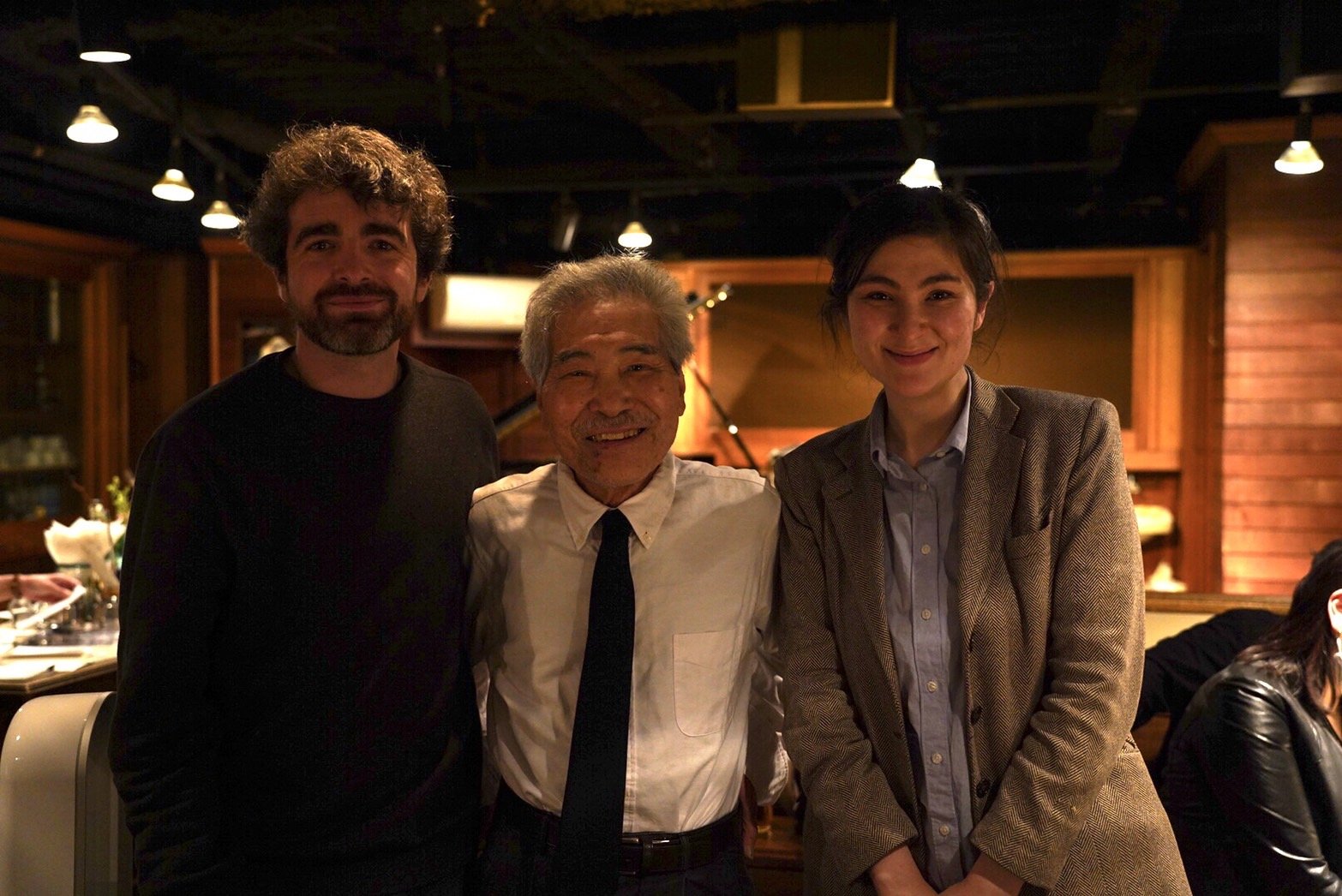
Author (left) with fellow JET (right) and Hiroshi Narumi, past owner of Jazz Time Disk, Aomori’s longest-running jazz club.
Finally, the last impact worth discussing is for the music itself. Having established that both nations could expand their soft power capabilities by engaging in reciprocal jazz funding, it is important to address why support is needed now more than ever. It would be easy to dismiss the necessity of this endeavor by arguing that the private sector is best equipped to handle matters of music performance and tour organization. This would be a grave mistake. Currently, both the United States and Japan are experiencing a troubling cost of living crisis that makes international performance economically unfeasible for all but the biggest names in music. The United States should take this as a matter of grave concern, especially at a time when its political and cultural ties have become uniquely strained. Without direct intervention, it is not hard to imagine that in the near future most artists will simply be priced out of engaging in international tours, which would inevitably lead to a decrease in soft power projection.
Conclusion
The ability for jazz to have an incredibly powerful impact on the cultural ties between the peoples of the world is immense. The long and storied history of jazz diplomacy is both well documented in its effectiveness and tragically underutilized in the contemporary world. While a Jazz Ambassadors–style program is only one among many that both Japan and the United States should support in order to maintain their cultural and diplomatic ties, it is worthwhile emphasizing that the unique nature of jazz provides a powerful tool that can be utilized for the good of U.S.-Japan relations. Supporting a program like this one to increase awareness of the shared cultural and artistic values that exist not only between Japan and the United States but also our other regional allies will help maintain one of the most important diplomatic relationships for both nations in the twenty-first century.
About the Author
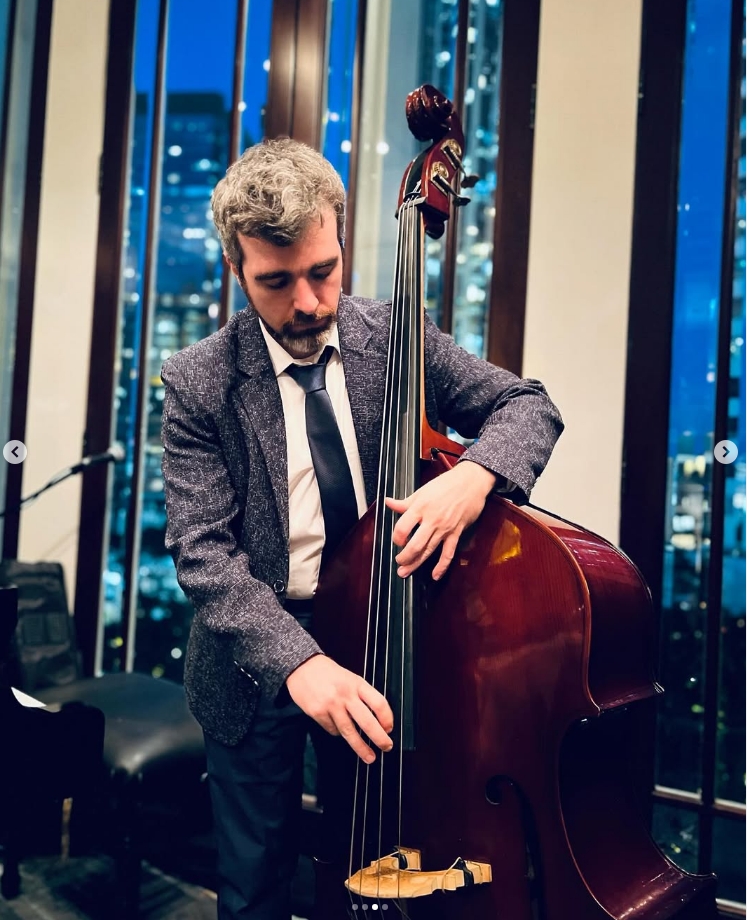
Ryan Molloy taught on the JET Programme from 2018 to 2022 in Aomori prefecture. He received degrees from the State University of New York in both Psychology and Philosophy, and received a M.Phil in Applied Linguistics from Trinity College Dublin. Currently, he teaches academic English through the State University of New York and at City College of New York. In addition to teaching, he is also a double bassist who performed at festivals and held residencies in Japan, New York City, the Republic of Ireland, and Hong Kong.
References
[1] Alton Hudson, “Swinging Diplomacy: How Jazz Transformed the White House,” The White House Historical Association, August 28, 2025, https://www.whitehousehistory.org/swinging-diplomacy-how-jazz-transformed-the-white-house.
[2] “Duke Ellington and the Jazz Ambassadors: Hepcats Fight the Cold War,” Booth Family Center for Special Collections at Georgetown University Library, December 18, 2023–March 31, 2024, https://library.georgetown.edu/exhibition/duke-ellington-and-jazz-ambassadors-hepcats-fight-cold-war.
[3] E. Taylor Atkins, Blue Nippon: Authenticating Jazz in Japan (Duke University Press, 2001).
[4] Andy Thomas, “Art Blakey: First Flight to Tokyo,” Everything Jazz, August 2, 2024, https://www.everythingjazz.com/story/art-blakey-first-flight-to-tokyo/.
[5] Rod Meade Sperry, “Remembering Wayne Shorter, Rogue Philosopher (1933–2023),” Lion’s Roar: Buddhist Wisdom for Our Time, March 2, 2023, https://www.lionsroar.com/wayne-shorter-rogue-philosopher/.
[6] “Toshiko Akiyoshi,” National Endowment for the Arts, accessed May 10, 2026, https://www.arts.gov/honors/jazz/toshiko-akiyoshi.
[7] Zan Stewart, “A Non-Traditional Arrangement: After Making Headlines as a Musical Oddity in the ‘50s, Then Nearly Giving It All Up in the ‘60s, Pianist and Big-Band Leader Toshiko Akiyoshi Has Found Her Place with a Distinctive Blend of Eastern and Western Idioms,” Los Angeles Times, November 14, 1993, https://www.latimes.com/archives/la-xpm-1993-11-14-ca-56566-story.html.
[8] “Toshiko Akiyoshi,” National Women’s History Museum, 2022, www.womenshistory.org/education-resources/biographies/toshiko-akiyoshi; Brandi Denison, “Blakey, Art (Ibn Buhaina Abdullah),” Encyclopedia of Muslim-American History, edited by Edward E Curtis (Infobase Publishing, 2010), 85f; Matt Phillips, “Wayne Shorter’s ‘Speak No Evil’ at 60,” Everything Jazz, March 26, 2026, https://www.everythingjazz.com/story/wayne-shorters-speak-no-evil-at-60/.
[9] Shaimaa Khalil and Kelly Ng, “The Rise of the Far-Right ‘Japanese First’ Party,” BBC, July 21, 2025, https://www.bbc.com/news/articles/cly80nnjnv5o.
[10] S.F. Santos, “Trump Makes Pearl Harbor Remark in Meeting with Japan’s PM,” BBC, March 20, 2026, https://www.bbc.com/news/articles/c8dlpr074q3o;“Implementing The United States–Japan Agreement,” The White House, September 4, 2025, https://www.whitehouse.gov/presidential-actions/2025/09/implementing-the-united-states-japan-agreement.
[11] “Foreign Exchange: Cross-Cultural Conversations with Anime Visionaries,” Japan Society, accessed May 10, 2026, https://japansociety.org/film/foreign-exchange-2025/.
[12] “VGM Jam Sessions NYC,” VGMJams.com, accessed May 10, 2026, https://www.vgmjams.com/nyc.
[13] A sideman is a musician who is hired for a specific purpose or performance but who is not a regular member or the leader of the group performing.
[14] “Jazz Ambassadors,” The United States Army Field Band: The Musical Ambassadors of the Army, accessed May 10, 2026, https://www.armyfieldband.com/jazz-ambassadors.
[15] Justin McCurry, “Two U.S. Marines Investigated Over Alleged Rape at Military Base in Okinawa,” The Guardian, April 24, 2025, https://www.theguardian.com/us-news/2025/apr/24/us-marines-investigated-alleged-rape-military-base-okinawa-japan.
[16] American Voices, accessed May 10, 2026, https://americanvoices.org/.
[17] Linsey Galloway, “Extreme Ways Countries Are Combatting Overtourism,” BBC, February 19, 2026, https://www.bbc.com/travel/article/20260218-extreme-ways-countries-are-combatting-overtourism.
[18] “Nango Summer Jazz Festival,” Hachinohe City, updated April 11, 2026, https://www.city.hachinohe.aomori.jp/soshikikarasagasu/nangojimusho/matsuri_event/2/4024.html.

About JETs on Japan
JETs on Japan is a partnership between USJETAA and Sasakawa Peace Foundation USA that features JET alumni perspectives on US-Japan relations. on a variety of topics relevant to US-Japan relations. The publication elevates the awareness and visibility of JET alumni working across diverse sectors and provides a platform for JET alumni to contribute to a deeper understanding of US-Japan relations from their fields.
*Published articles are the opinion of the author and do not necessarily reflect the views of USJETAA or Sasakawa USA.
