
Let’s Read English: Kiho’s Reading Revolution
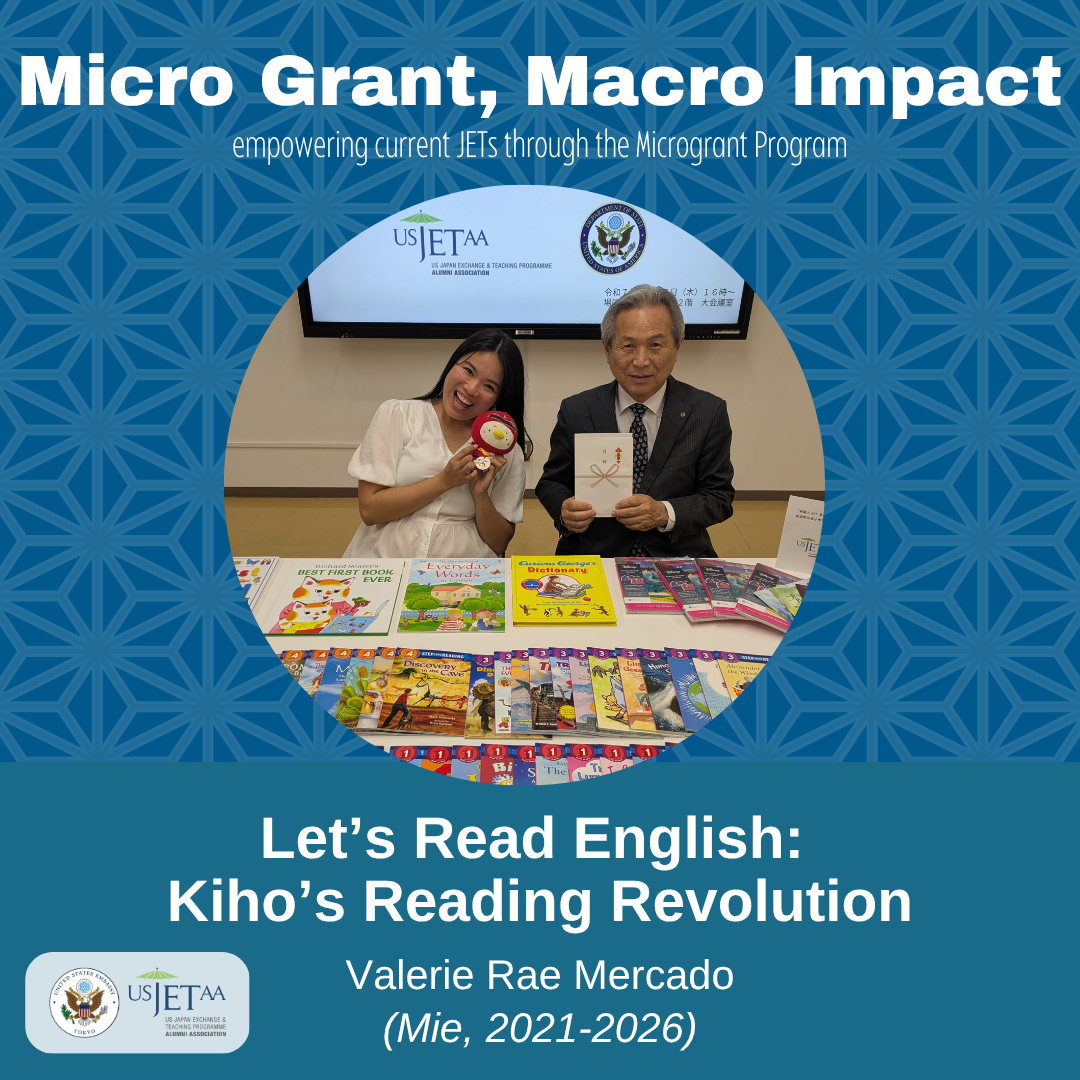
Valerie Rae Mercado (Mie, 2023-2026)
2024 USJETAA Microgrant Program Recipient
“I can’t read this!” “This is Japan, I don’t know why we’re learning English.” “It’s too difficult for the students.”
These were all things that the ALTs in Kiho-cho, the southernmost town in Mie Prefecture, heard when they arrived in 2018. The ALTs had noticed that the students could barely recognize the alphabet, let alone write their names. The students had to continue into Junior High School English, where students are required to learn grammar points such as past tense and present participle all in the first grade. To help ease the transition between Elementary and Junior English, the Kiho ALTs decided to implement phonics into the English classes, but of course, were met with a lot of setbacks.
With the COVID-19 pandemic and the national change to make their English classes official for 5th and 6th graders, there was a bunch of confusion. Elementary teachers who had no formal training on teaching English were suddenly expected to teach English, lesson plan, and coordinate with ALTs. This change, however, gave the ALTs in Kiho a bigger say in the lesson plans and thus, were able to convince the homeroom teachers to allow phonics into the English lessons. By 2021, every school in Kiho had incorporated phonics in their lessons but at different levels.
After arriving in Kiho, I learned from my co-ALTs about the phonics lessons that they were conducting in the town and their advice on teaching phonics to ESL students. Bringing in my linguistics background, we worked together to figure out what techniques and strategies would work best for our students and in our circumstances. This was when we faced our next setbacks- reading. At this point, students understood letter sounds, blending, and could read short phonetic sentences, which we then wanted to transition into reading phonetic picture books, however, there were many that did not believe that the students could read picture books and insisted on just reviewing letter sounds.
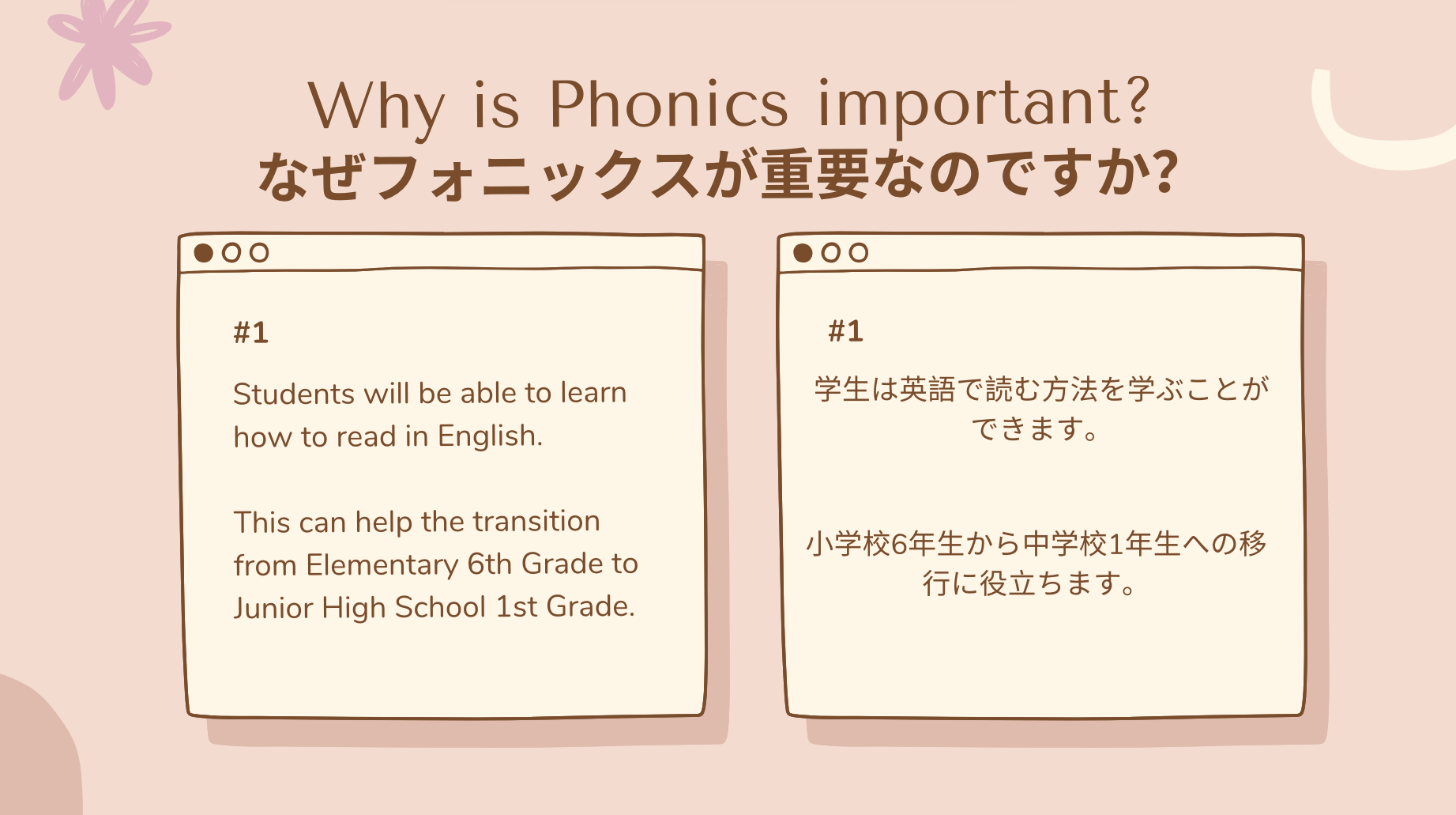
It wasn’t until one class of fifth graders, who continued to read sentences and eventually phonetic picture books, that we were able to convince everyone of the students’ potential. Which leads us to today, 2026. After years of trial and error, we finally settled on a consistent phonics foundation for the students. But of course, this phonics program is still under development and will continue to be improved by the present and future ALTs of Kiho.
A former Shingu ALT (and former microgrant recipient) introduced the USJETAA Microgrant to me in the summer of 2023. As she described the microgrant, I immediately thought of all of the books that we could incorporate into the phonics program and how it could encourage the students to try and read outside of the classroom. In the summer 2024, I applied for the microgrant with the project title “Let’s Read English!” with the goal of trying to obtain as many phonics books as possible to enhance the reading ability and confidence of our students. After receiving the grant, I discussed with teachers, principals, and the Board of Education to figure out what books would be appropriate for our students.
It took several months of planning and figuring out logistics, but by the end of it, I was able to purchase over 96 books, including picture books for our kindergarten, simple phonetic books for our elementary schools, and slightly more difficult books for our Junior High Schools. From only having 5 simple early reader English books to over 96 books, our town’s teachers were overjoyed.
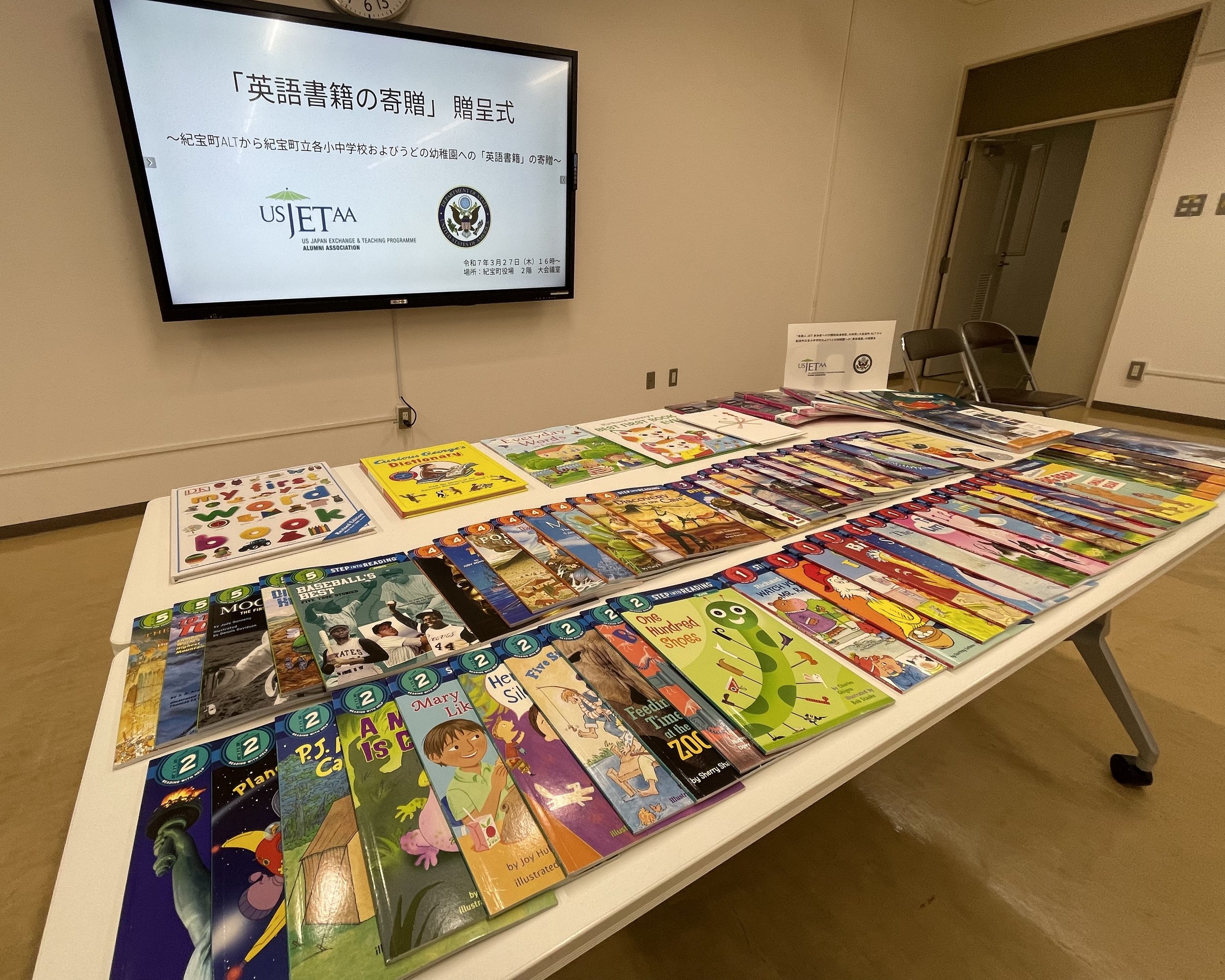
As the all the books arrived in mid-March 2025, the teachers and ALTs decided that it would be best to implement the books into the schools at the start of the 2025-2026 school year that following April.
The phonics books were split evenly amongst the schools and have been added into the libraries of each respective school. At the elementary level, the books have been continuously used in classrooms as the phonics warm-up activity or as a bonus activity for students that what to challenge their reading skills. Often times, the books are read as a class and then progresses into groups, pairs, then individually by the time they reach the JHS level . Depending on the level and class, some junior high schools have their students reading the books individually in the class’s designated “reading time” or sometimes as a class warm up.
At the end of the second semester, I asked the teachers and students their thoughts on the books. As it’s the first time to have this many books and to also have students able to read English at this level, we did face some ups and downs.
“I believe the books are good for the students and I have three reasons for this. First, in Japan’s curriculum, they have few chances to read casually, everything in the textbook or in the standard curriculum is geared towards academic reading (many tests, quizzes, etc). The books that Valerie provided us gave us a chance to read stories casually and most importantly the books gave them a chance to read what they want.
Second, the reading and overall language skills. Reading allows an increase in vocabulary and writing skills since they encounter new words and new expressions in the books. When they meet such expressions they can use it again when they write and speak, which is something I noticed after the students read the books.
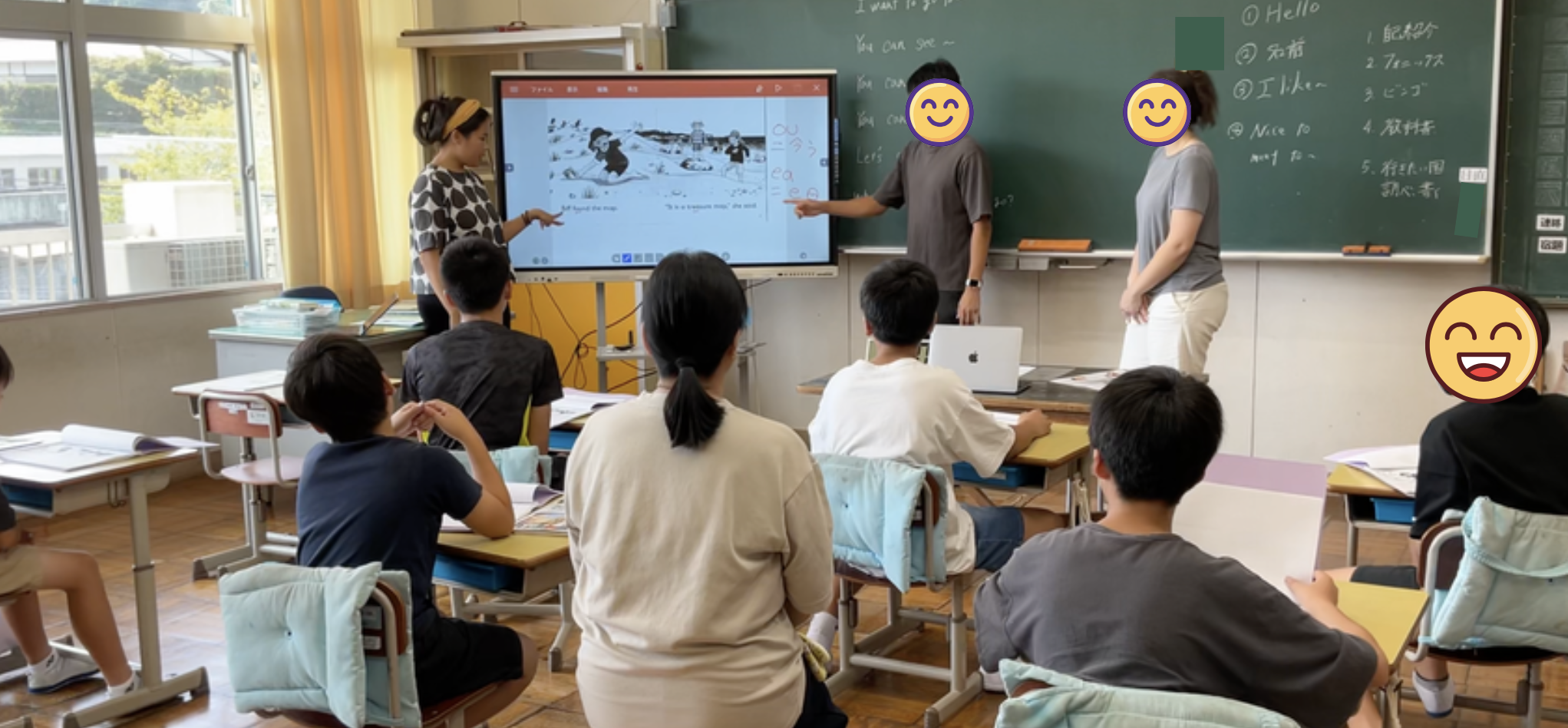
Lastly, the books are very authentic. For Japanese English Teachers, it’s difficult to find this amount of authentic books in Japan. The students are able to interact with other cultures and natural language from these books,” said the JHS JTE who also helped in pushing for the phonics program.
For the Junior High Schools, the Japanese English Teachers (JTEs), and I agreed that they wanted to have books that involved stories from different cultures and also stories that were quite famous so that the kids would have a sense of familiarity while reading in English.
“I work at a mid-sized junior high school in Kiho Town. I used the Disney books as a warm up activity in the second year classes. The students enjoyed reading it because most of them know part of the story” one of the JHS JTEs said.
Some of the schools went through the books faster than other schools, so they were able to develop a routine within the lessons.
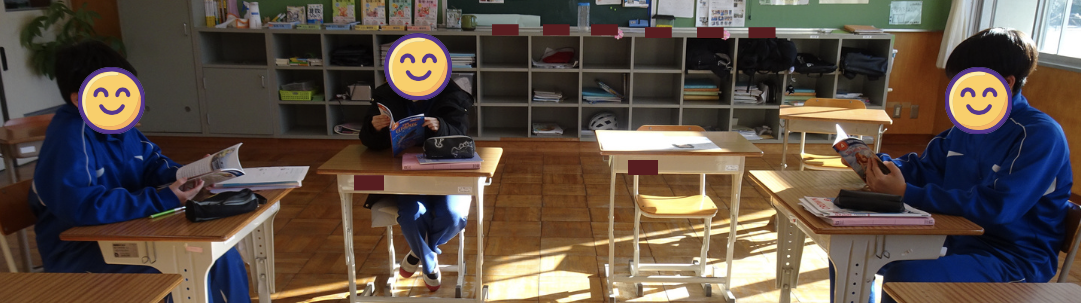
“In a sixth-grade English class, students learned phonics using the picture books “Hot Dog,” “Cat Traps,” and “Watch Your Step, Mr. Rabbit!” Each book was divided into three or four sessions during the one-hour lesson and students checked how to read each word using phonics, read each sentences in English and considered their meanings. At first, the students struggled to get used to the process. However, after working on the books several times, some students were able to read and understand simple sentences, as similar expressions were repeated throughout each book. While “Watch Your Step, Mr. Rabbit!” contains some difficult expressions, I thought that “Hot Dog” and “Cat Traps” in particular were easy to work on, as they contained many short, simple sentences,” one of the elementary school JTEs reported.
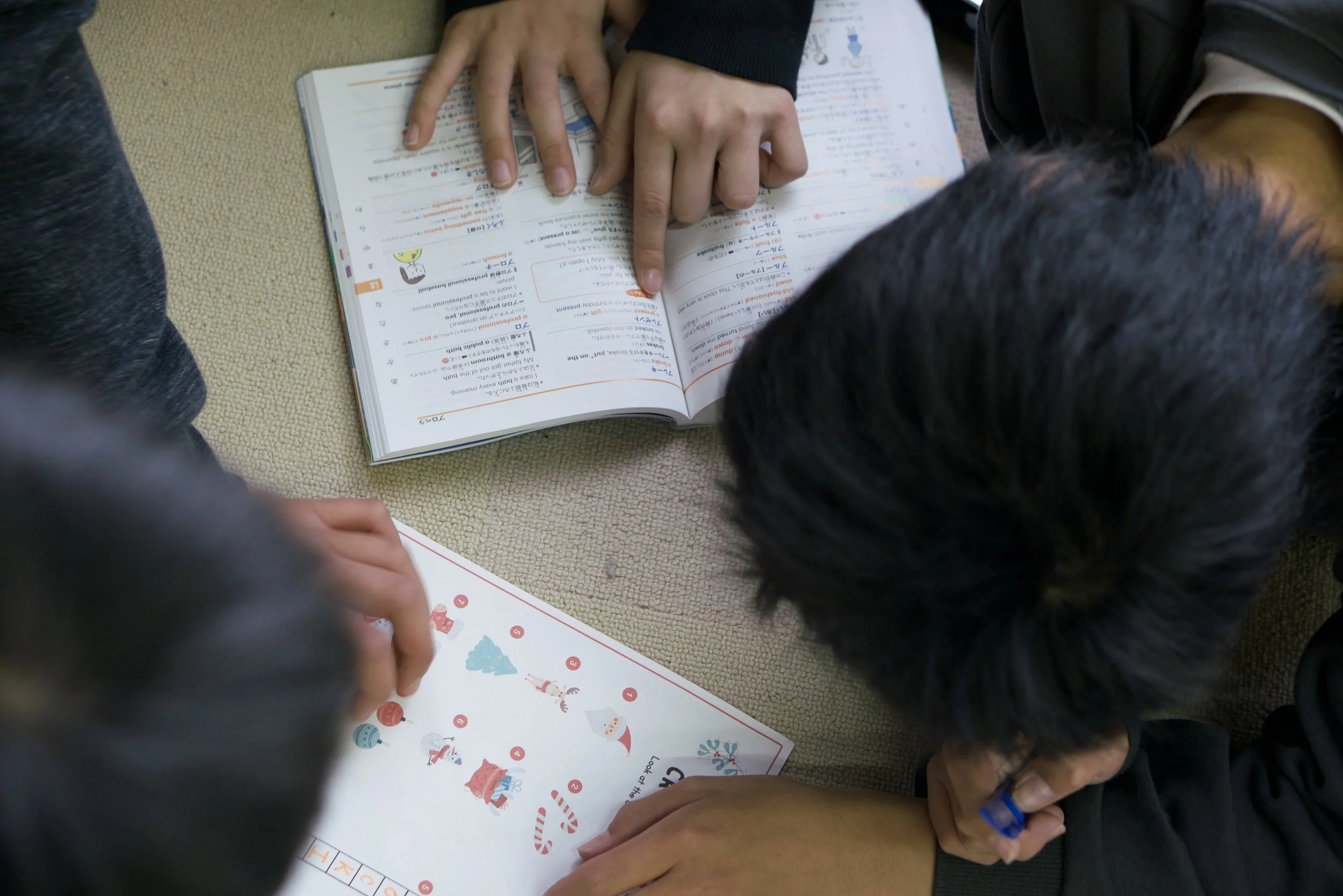
The kids also shared their opinions on one of the books, “Fish is Fish”. They enjoyed acting out the lines “Frogs are frogs and fish is fish and that’s that!” so much that they would repeat the sentences in the hallways or say it in class even months after completing the page.
“I really enjoyed the part where fish thought that humans were also fish,” a JHS 2nd year said.
“I really enjoyed the page where fish and frog met each other again after a long time,”another JHS 2nd year said.
I continued to ask students their opinions on the types of books that were selected and how they felt reading them.
“The books are good. I want to read in English more. I want to learn more English” one of the 6th graders said.
“These books challenge me to learn more vocabulary, it can be difficult but I enjoy it. I want to try reading more English books,” a JHS 3rd grader said.
But of course, finding the right books for the students is proving to be a challenge.
“I enjoyed reading the new books, but reading new words is a bit difficult for me,” a JHS 2nd year had said. “Since I don’t know how to pronounce them, I couldn’t read the story aloud with full confidence.”
“Some words in the book were too difficult for some students,” one of the JHS teachers said. “Books are level 3(A1-A2). I think Level 1 or 2 would be good for 1st and 2nd grade. To get used to reading, our ALT makes her own reading materials(easier ones) now. We will try the books after students build a foundation.”
Although I’m in my 5th and final year, I will encourage my co-workers and my successors to apply for the Microgrant again, so we can eventually develop a library of English books for our town’s students. As the years go by, I hope that the books will continue to foster the students’ interest in, not only reading in English, but also in learning about different cultures and stories.
About Valerie Rae Mercado (Mie, 2021-2026)
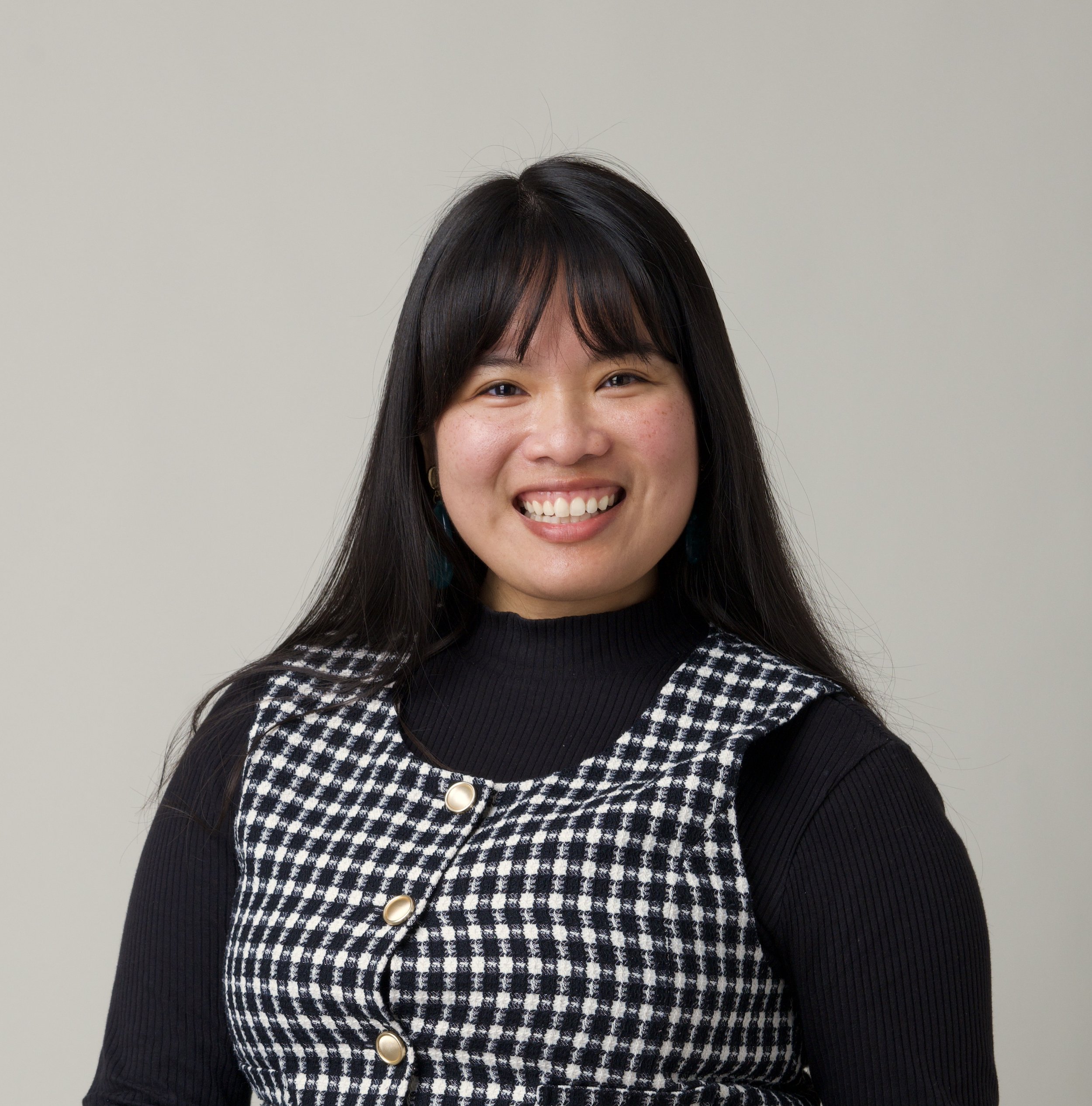
Valerie Mercado is finishing her 5th year as an ALT in Mie Prefecture. Growing up in Houston, Texas, Valerie was always surrounded by a multicultural environment which led to her interests in cross cultural exchange. Her time at Kyoto University would eventually leave Valerie with a further passion in language acquisition and an interest in the JET Program. Valerie graduated with a degree in Linguistics, English, and Asian Studies from the University of Texas at Austin in 2020. With intentions of only staying 3 years, Valerie fell in love with her JET Program town and heightened her passion for education. Valerie hopes to continue working in the education field while sharing her love for the Kumano area. Feel free to connect with Valerie on LinkedIn here: www.linkedin.com/in/valerieraemercado
The Senpai Spotlight series is brought to you through partnership between USJETAA and AJET’s CONNECT Magazine. The series features JET alumni from the US who have made successful careers for themselves in various fields—with the goal of inspiring young JETs and JET alumni to pursue their own dreams while also offering some words of advice only a senpai could know.
If you, or someone you know, would like to be featured as a Senpai Spotlight, please reach out to us at contact@usjetaa.org.
This edition of Senpai Spotlight was written by Bobby Nawbary who recently graduated with a Masters in Teaching English and found his way to Aomori with the JET Program. His passion for language and culture has led him to volunteer within State Department cultural exchanges and international student programs. He enjoys presenting his research at various conferences which involves helping students transition into higher education and become lifelong language learners. He also writes for Good Morning Aomori, a long standing JET-run publication. You can find more from Bobby here.
