

Revitalizing Rural Communities: What the United States and Japan Can Learn from One Another
Click here to view and download this article as a printable pdf.
Samantha Sodetz (Kagoshima, 2018-2019)
Rural communities in both Japan and the United States have much to learn from one another as they seek to address rural depopulation. In a globalized world where many people, especially young people, are driven to metropolitan areas in pursuit of economic advancement—think, Osaka, Tokyo, and Fukuoka in Japan and coastal cities like New York and Los Angeles in the United States—often-neglected rural communities in both countries are facing cascading problems. Schools with dwindling numbers of students start to disappear, health care becomes increasingly inaccessible, and economic opportunities eventually run scarce. [1] Both countries’ efforts at rural revitalization have come with their successes and failures. In Japan, rural revitalization places an emphasis on drawing newcomers to permanently move to rural areas, often without considerable plans of making rural communities attractive for long-term settlement. [2] Meanwhile, in the United States, rural revitalization efforts are far less centralized and aim to improve the economic activity of rural towns, yet the lack of sustained governmental support may pose chronic financial instability and can ultimately lead to the dissolution of such initiatives. [3]
In Japan, I first encountered rural depopulation in early August of 2018, when I arrived in Kimotsuki-cho, a rural community near the southernmost tip of Japan where I served on the JET Program. Kimotsuki-cho is a relatively new town, formed from the merger of Koyama-cho and Uchinoura-cho, two dwindling townships that consolidated in 2005 as part of a government reorganization spurred by depopulation. [4] Upon my arrival in late 2018, Kimotsuki had close to 14,227 residents. [5] Pockets of town exhibited signs of a dwindling population: some areas boasted enough families to comfortably populate a junior high school, while other areas, deeper in the mountains, had only a handful of residents with school-aged children.
Similar to many rural areas in Japan, Kimotsuki faces the challenge of maintaining a sizable youth population. My school visits often entailed hours of driving through mountain roads along the Pacific Ocean to meet fourteen students in one school, while on other occasions, I found myself with nearly two hundred students in schools near Kanoya, a regional city. A handful of schools had enrollment averaging between thirty and fifty students.
Meanwhile, in the United States, rural communities face similar challenges with population decline. Just over three hours from the Chicago metropolitan area, there is a small town in Indiana called Rockville, a place affectionately known as “the covered bridge capital of the world” for its many nineteenth-century timber bridges. Rockville, the largest town of Parke County, is home to numerous multigenerational family farms scattered along forested country roads. It also has a considerable Amish population. [6] In my case, regular visits to a relative’s farm in Parke County provided an opportunity for me to spend time in Rockville, where I have been learning about this region’s history, industry, and traditions over the past few years.
Using the towns of Rockville, Indiana and Kimotsuki, Kagoshima as case studies, this article will examine the demographics of rural communities and policies surrounding revitalization, explore alternative avenues to address population decline and create vibrant communities, and what measures can be taken to revive not only economic prospects, but to restore the vitality these communities formerly enjoyed.
The Demographics and Revitalization Projects of Rural Communities
Japan: Kimotsuki, Kagoshima
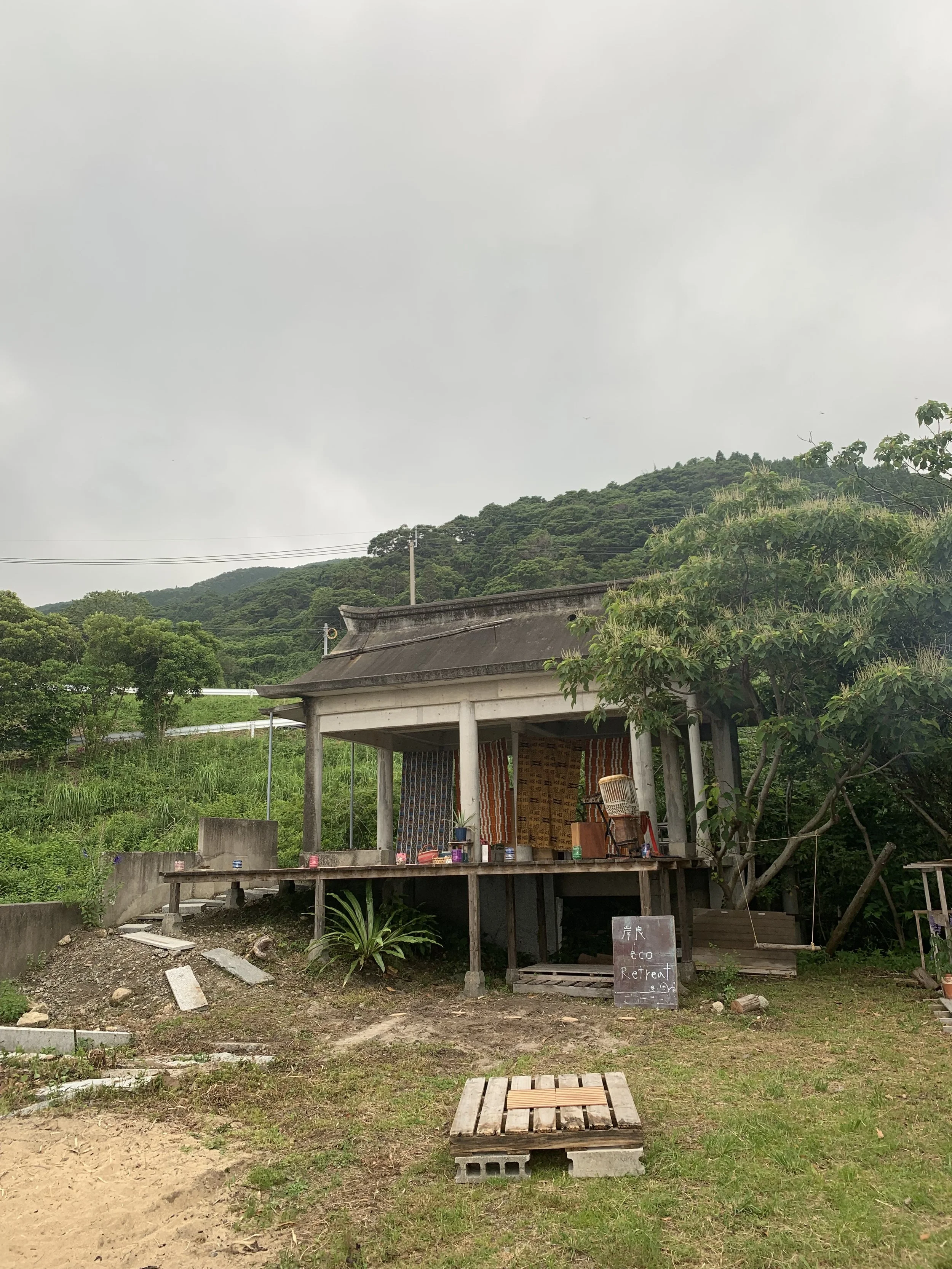
A retreat in Kimotsuki, Kagoshima Prefecture. (photo courtesy of author)
Only 8 percent of Japan’s population now lives in rural areas; plus, 30 percent of Japan’s population is aged 65 or over. [7] Japan’s aging society is especially visible in rural areas like Kimotsuki, where the population of those aged 65 or older is nearly 45 percent of its current population of 13,343 residents. [8] The most recent census counted only 2,170 residents between the ages of 0 and 17. Notably, Kimotsuki’s population declined by nearly 6 percent—from 14,227 to 13,343—in the seven years since I started working for the JET Program.
These numbers are not projected to rise, as Kimotsuki’s population has faced steady decline since the 1960s. [9] Since the late twentieth century, much of the discourse in Japan surrounding rural revitalization has focused on shuffling and reshuffling the population of megacities to the countryside. In 2009, the Ministry of Internal Affairs and Communications launched the Local Revitalization Cooperator (LRC; in Japanese, chiiki okoshi kyouryokutai), a program to encourage urban residents to move to depopulated regions and “revitalize” these areas with their unique skill sets. [10] The program offers participants financial incentives with three years of housing and a salary for their work. LRC members are encouraged to use their specific interests and skills to attract visitors and economic activity to rural regions, such as opening a restaurant in a place that lacks community gathering spaces or starting an Airbnb to facilitate local tourism. Kimotsuki had a small number of LRC participants (fewer than ten individuals) working on various projects while living in town. Since the LRC launched, approximately 65 percent of its participants remained in the rural areas after their three-year terms; however, many of these participants have expressed concerns about the long-term prospects for staying in rural communities, since many places lack adequate schools and health care. [11] While the LRC has succeeded in providing its participants with relocation support and a purpose, it risks framing rural in-migration as the sole solution to the depopulation crisis rather than investing in more comprehensive strategies to make rural areas livable long-term.
United States: Rockville, Indiana
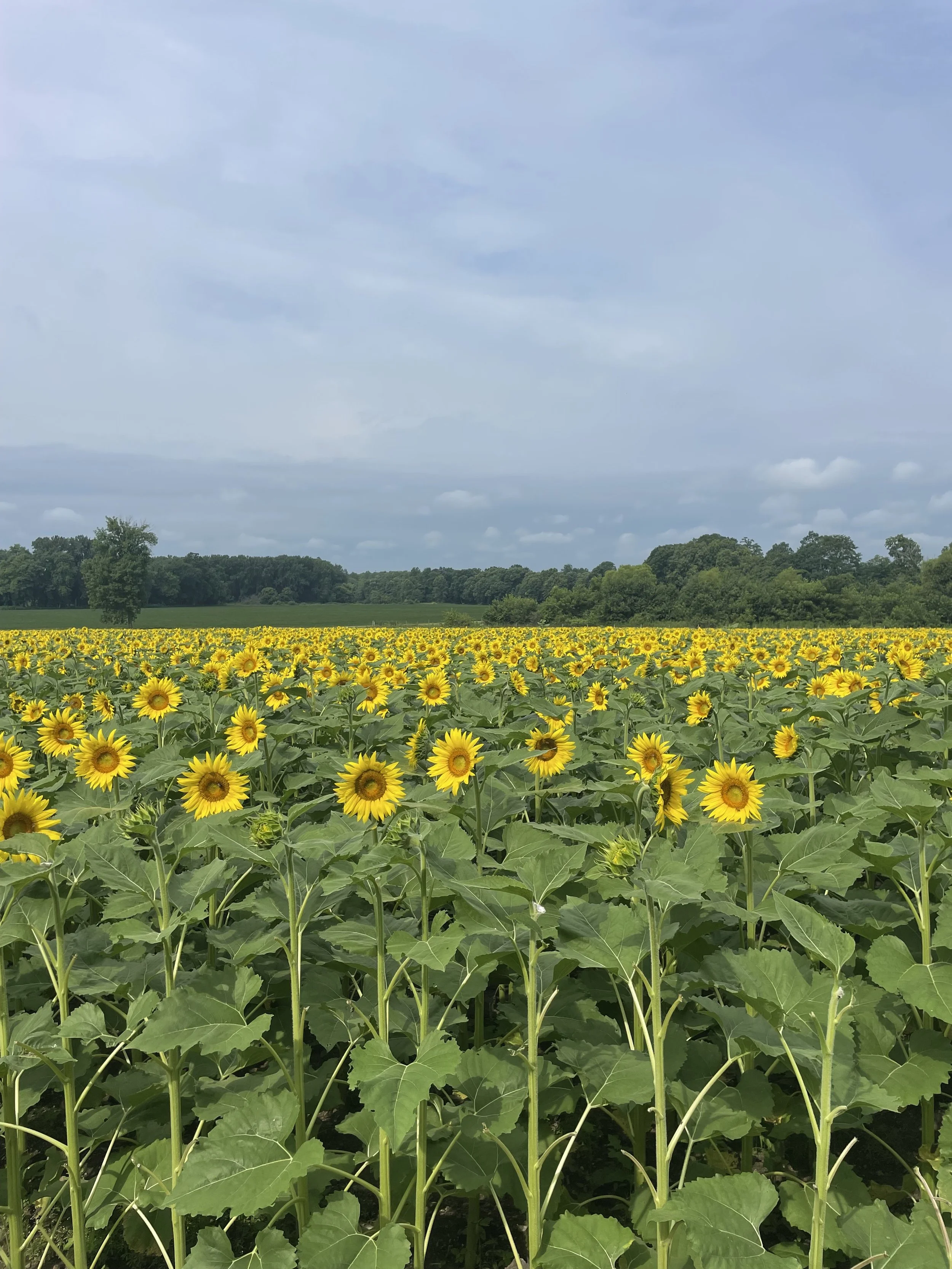
Typical scenery from Rockville, Indiana. (photo courtesy of author)
In the United States, 1 in 5 people (nearly 20 percent) of the total population live in rural areas. [12] Located in central Indiana, Rockville has a total population of 2,551 residents at a median age of 50, with roughly 25 percent of its residents aged 65 or older (there are fewer people aged over 80 in Rockville compared to Kimotsuki, which may account for a smaller overall percentage of Rockville’s elderly population.) Rockville’s population is rather stagnant, with census data from 2010 reflecting a population of over 2,600, compared to 2,551 at the time of the 2020 census. [13]
There is no federal program similar to Japan’s LRC for attracting rural in-migration to Rockville or other rural areas. The closest comparison would be AmeriCorps, a federal agency that engages Americans in service work to help communities address poverty, improve education, or strengthen environmental stewardship. These programs are more alike in their service-oriented missions, as AmeriCorps does not directly encourage rural settlement. U.S. policy concerning rural revitalization is less centralized than Japan’s, with new funding and initiatives coming from a mix of public and private sources. Since 1980, a nonprofit organization called Main Street America has partnered with grassroots leaders to revitalize the downtown (“Main Street”) of rural areas, investing in small businesses, historical building preservation, and community programming. [14] Main Street America is considered a place-forward initiative—if there is a flourishing corridor of local businesses and gathering spaces, people are more likely to visit these places and invest in their future. Rockville is a compelling case of local revitalization without excessive reliance on relocation. Leaning into its local history and traditions, it draws thousands of repeat visitors to its small businesses and historic structures, invigorating the rural economy.
Creating Urban-Rural Connections through Kuni
Revitalizing rural communities consists of more than simply increasing their number of residents. Demographics alone are not sufficient to draw people to live in a place long-term or inspire urbanite outsiders to repeatedly visit these rural communities. In the book Kuni: A Japanese Vision and Practice for Urban-Rural Connection, author Tsuyoshi Sekihara advocates for a rural landscape of small, autonomous places balanced with engagement with the outside world (ideally on their own terms). [15] In Sekihara’s view, these rural places must form kuni, a word that traditionally denotes “kingdom” or “country” but which he defines as small, independent communities where people share in the abundance and hardships of the land. A kuni is not exclusive to residents—it also includes repeat visitors from cities, who feel a sense of attachment to the land and meet and talk with residents about local harvests, festivals, damage from a storm, or even the arrival of a newborn. It is a place of mutual benefit for both rural and urban dwellers: for its rural residents, the kuni brings economic activity and new relationships; for urban visitors, the kuni provides a haven from the stress of urban life and a renewed connection with the natural world.
Creating Kuni through Local Industry
Local industry is one method of drawing outsiders to form connections with a rural community. In the case of Rockville, Indiana, local artisans make specialty products for use both within and outside their community. To introduce one example, Richard Allan is a Rockville-based broom maker who uses a combination of hay, straw, beads, and household objects to make custom brooms. Allan sells these brooms at local markets in Rockville, especially during seasonal events like the Covered Bridge Festival. Recently, Allan started shipping brooms to urban residents who have previously purchased brooms at a seasonal festival. With this practice, he can boast repeat customers of urbanite outsiders who both purchase his products at seasonal markets and order brooms for themselves as well as family or friends back in the city.
Traditional Experiences as a Connection
In addition to local industry, traditional festivals unique to a region can serve as a gateway to outside visitors. Kimotsuki draws large crowds annually to its long-running Yabusame festival, an ancient ritual of horseback archery performed around the fall harvest. [16] Yabusame is one of several Shinto traditional festivals that occur in Kimotsuki every year. These Shinto festivals are one of the primary sources of traction for outside visitors, who bring with them economic activity and an interest in learning about local traditions.
Every year, the Yabusame festival selects a local 13-year-old boy to be the horseback archer. Yabusame depends on the involvement of youth to carry out the rites of this ceremony; without youth participation, this festival cannot happen. The importance of youth learning about local traditions and participating in Shinto festivals cannot be understated: youth education is integral to preserving cultural knowledge and traditions for future generations. People who join these festivals, whether as participants or observers, develop an interest and respect for regional traditions, which in turn will inspire them to return to Kimotsuki on a regular or semi-regular basis. Maintaining a population of repeat visitors with attachment to the area is essential to ultimately maintaining a vibrant rural community—and a cornerstone of building kuni.
Similar to Kimotsuki, Rockville has a prominent festival that draws thousands of visitors annually to appreciate small-town Americana charm: The Parke County Covered Bridge Festival. [17] Starting in the mid-nineteenth century, timber-truss bridges in parts of Rockville were constructed with a roof and side walls to serve as protection from the elements and extend the bridges’ lifespan. The Covered Bridge Festival is perhaps Rockville’s most important effort in drawing repeat visitors, as residents rely on this deeply-rooted tradition to invigorate the community every year. Indeed, The Covered Bridge Festival is a boon for Rockville’s economy; every October local artisan vendors like Allan can sell their products to wider audiences, and other small business owners benefit from visitors’ spending as well. Knowledge and appreciation of Rockville’s thirty-one covered bridges is passed along to outsiders who return regularly (or semi-regularly) to take photos of the bridges and explore the county’s local nature parks, all while patronizing the local economy. Economic support is yet another cornerstone of a rural-urban kuni.
Making Vibrant Communities: What the United States and Japan Can Learn from Each Other
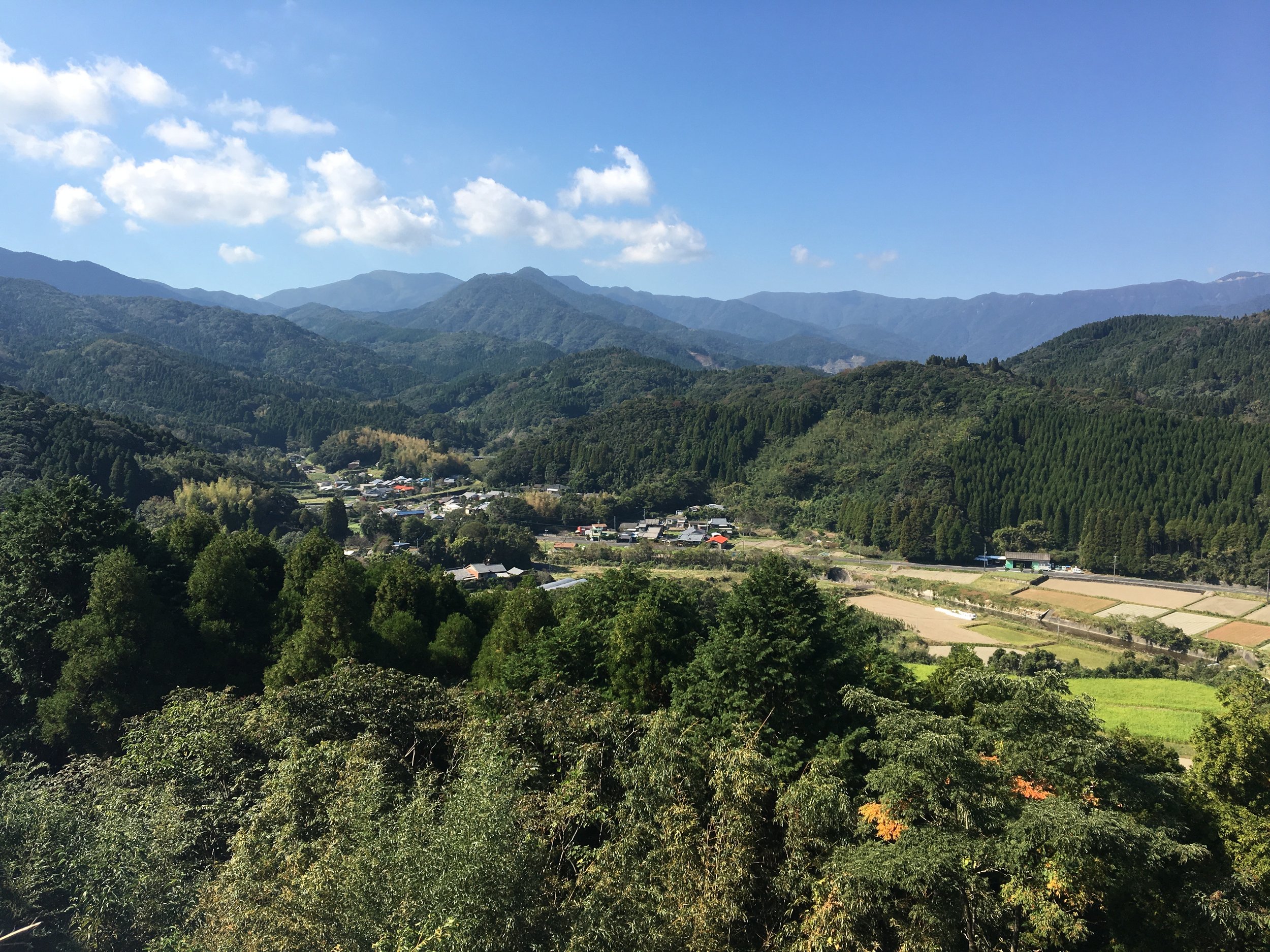
The town of Kimotsuki. (photo courtesy of author)
Japan and the United States can learn three lessons from each other when it comes to addressing rural abandonment: incentivizing relocation (similar to the LRC), attracting visitors with traditional festivals and experiences, and promoting local industry. While the LRC alone is not a panacea for rural depopulation, it has had some success in attracting a population of outsiders to move and establish businesses in rural communities. From the case of Kimotsuki, Rockville could learn from the LRC’s relocation and salary support for individuals interested in moving to rural communities. Such a program could offer a form of continuous support for the region, rather than relying on short-term engagement alone.
Both Kimotsuki and Rockville can lean into their local industries and traditions as a gateway for interacting with visitors and potential newcomers. Sharing rituals and traditions with outsiders, from Yabusame to covered bridges, can be a dynamic pathway to self-preservation. Kimotsuki may consider featuring local artisans at its annual Yabusame festival, similar to the way Richard Allan sells custom brooms to visitors during The Covered Bridge Festival. In addition, Rockville can learn from Kimotsuki’s example of involving and educating local youth in its annual Covered Bridge Festival.
There is hope for revitalization beyond the scope of repopulating rural communities. By creating kuni with shared traditions and local industries, we can strengthen the grassroots ties between rural and urban regions. It is time to build genuine communities and learn from our neighbors, rural and urban alike.

About the Author
Samantha Sodetz graduated with her BA from the University of Florida in 2018. She was a JET CIR in southern Kagoshima, Japan (2018-19). Currently, she works in international student advising in higher education. Samantha lives in Chicago and enjoys film and music appreciation, hiking, photography, and floral design.
References
(1) Hiroshima University, “15 Years On, Researchers Assess the Impact and Lessons Japan’s Rural Movement Initiative Offers,” Phys.org, June 5, 2024, https://phys.org/news/2024-06-years-impact-lessons-japan-rural.html
(2) Tsuyoshi Sekihar and Richard McCarthy, Kuni: A Japanese Vision and Practice for Urban-Rural Reconnection (Penguin Random House, 2022).
(3) “Reinvestment Statistics,” Main Street America, accessed October 25, 2025, https://mainstreet.org/our-network/collective-impact
(4) “ホーム: 肝付町,”Kimotsuki-town.jp, accessed September 11, 2025, https://kimotsuki-town.jp/
(5) “Kimotsuki (Kagoshima , Japan) – Population Statistics, Charts, Map, Location, Weather and Web Information,” Country Statistics, Citypopulation.de, accessed September 11, 2025, https://www.citypopulation.de/en/japan/kagoshima/_/46492__kimotsuki/
(6) Erik Wesner, “The Amish of Parke County, Indiana (24 Photos) – Amish America,” Amish America - Exploring Amish Culture and Communities, July 30, 2021,https://amishamerica.com/amish-parke-county-indiana/
(7) “Population Ages 65 and above (percent of Total Population) – Japan,” World Bank Open Data, accessed September 11, 2025, https://data.worldbank.org/indicator/SP.POP.65UP.TO.ZS?locations=JP
(8) “Kimotsuki (Kagoshima , Japan) – Population Statistics.”
(9) “Kimotsuki (Kagoshima , Japan) – Population Statistics.”
(10) Simona Zollet, “Revitalising Rural Areas through Counterurbanisation: Community-Oriented Policies for the Settlement of Urban Newcomers,” Habitat International 145 (March 2024).
(11) Hiroshima University, “15 Years On.”
(12) U.S. Census Bureau, “Nation’s Urban and Rural Populations Shift Following 2020 Census,” Census.gov, April 4, 2024, https://www.census.gov/newsroom/press-releases/2022/urban-rural-populations.html
(13) “Rockville, IN | Data USA,” Datausa.io, accessed October 28, 2025, https://datausa.io/profile/geo/rockville-in#demographics
(14) “Reinvestment Statistics,” Main Street America.
(15) Sekihar and McCarthy, Kuni.
(16) “Koyama Yabusame Festival,”Japan National Tourism Organization (JNTO), accessed October 28, 2025, https://www.japan.travel/en/japans-local-treasures/kyama-yabusame-festival; “Local Vitalization Cooperator: Ensure Municipalities Fully Utilize Participants’ Enthusiasm,” The Japan News, April 30, 2024,https://japannews.yomiuri.co.jp/editorial/yomiuri-editorial/20240430-183273/
(17) Courtney Cook, “Parke County Covered Bridge Festival,” Parke County, Indiana, January 1, 2022, https://www.coveredbridges.com/covered-bridge-festival

About JETs on Japan
JETs on Japan is a partnership between USJETAA and Sasakawa Peace Foundation USA that features JET alumni perspectives on US-Japan relations. on a variety of topics relevant to US-Japan relations. The publication elevates the awareness and visibility of JET alumni working across diverse sectors and provides a platform for JET alumni to contribute to a deeper understanding of US-Japan relations from their fields.
*Published articles are the opinion of the author and do not necessarily reflect the views of USJETAA or Sasakawa USA.
