

Communities Defining Their Future: A Lesson from Japan
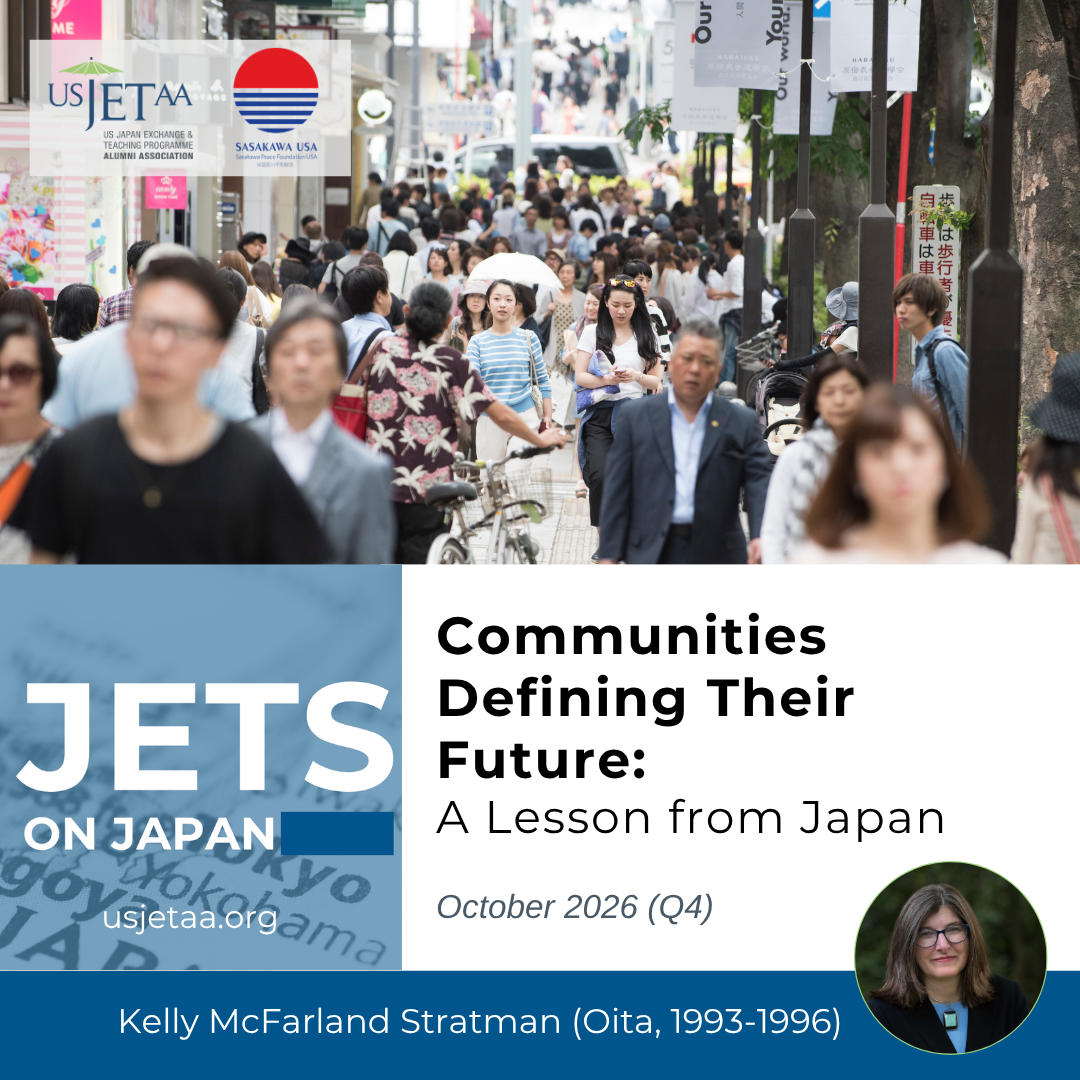
Click here to view and download this article as a printable pdf..
Kelly McFarland Stratman (Oita, 1993-1996)
When I lived in Japan on the JET Program in the 1990s, Japan was leading the world in technology, transportation, and telecommunications. In the very rural corner of Kyushu where I was assigned as an ALT, ancient Buddhist carvings sat down the road from a computer manufacturer, and a state-of-the art hovercraft transported travelers from the prefectural airport to the capital across Beppu Bay. Japan was synonymous with electronics and innovation, and the eyes of the world were on them.
Today, Japan is leading in different ways through its strong commitment to community engagement, which is manifested in the rise of public forums called citizen assemblies. These assemblies equip neighbors to collaborate in charting a future path for themselves and for generations to come. Over the past two decades, small groups of citizens have debated local issues in municipalities across Japan, and several major cities have hosted convenings on climate change since 2020. In these forums, regular citizens—nonexperts of all ages and professions—engage and discuss pressing issues and identify solutions. These forums are democracy in its purest form, echoing the past practices of Ancient Greece. The world—especially the United States—can learn from Japan’s experiences with citizen assemblies.
Democratic Dissatisfaction in Japan and the United States
These Japanese citizen forums are playing out against a political backdrop that is not entirely different from the United States. The Pew Research Center’s 2024 Global Attitudes Survey examined the attitudes of citizens about democracy in twelve economically advanced nations. While respondents generally embraced representative democracy, many expressed dissatisfaction with how it is working in their country. Such attitudes are especially prevalent in Japan and the United States, where roughly two-thirds of citizens in both countries reported being dissatisfied with how democracy is working in their country.[1]
In the United States, this decline in faith in democracy has been especially noted among 18–29-year-olds, the nation’s future leaders. In its 2025 survey, the Harvard Youth Poll, the Institute of Politics at Harvard Kennedy School found that only 13 percent of the more than two thousand young people polled believed that the United States is headed in the right direction. Trust in institutions has eroded, and nearly half of those surveyed reported avoiding political conversations because they worry about how others will react. The study’s authors noted that “social trust is unraveling” and “the civic fabric feels fragile.” [2]
While responses from the United States and Japan shared commonalities in defining the decline in democracy, answers diverged when asked how to address it. The Pew Research Center’s 2023 Global Attitudes Survey engaged more than thirty thousand respondents in twenty-four countries and asked an open-ended question about how to improve democracy. Both the United States and Japan named government reform and politicians as their top responses, but U.S. responses also named special interests, while Japanese responses focused on citizens. [3]
Citizen Assemblies
The belief in the power of individuals to build community, ideate together to solve problems, and collaborate on implementing solutions is essential for change. It is what fuels grassroots advocacy and creates the culture that has allowed citizen assemblies to take root in Japan and other parts of the world.
Japan hosted its first deliberative citizen assembly, or “mini public,” in 2005 in Chiyoda Ward, Tokyo. After studying German models, a unique approach was created to better reflect the needs of the Japanese culture and community: shimin-togikai, or Citizen Deliberation Meeting.[4] These one- to two-day deliberative sessions were focused on local (often noncontroversial) issues and included a random selection of residents.[5] Since then, it is estimated that more than five hundred deliberative mini-publics have been held across Japan. According to some, Japan may have the largest concentration of such forums in any one country.[6] Citizen gatherings (or in some cases, citizen councils) have focused on issues ranging from local planning and emerging technologies to waste management and climate change. Tens of thousands of citizens have been engaged, and policy recommendations have been drafted and implemented as a result of these gatherings.
Citizen assemblies are not a new concept nor are they unique to Japan. Examples of local gatherings can be found in communities in Switzerland, France, Germany, and the United Kingdom, and a citizen assembly was employed in Ireland to affect national change.[7] There are also notable cases involving communities in Canada and the United States. In fact, the United Nations is experimenting with the concept of a global citizen assembly to tackle global challenges and designing a Special Envoy on Future Generations role.[8]
The exact procedures, duration of engagement, and number and diversity of participants of each of these gatherings are unique and dependent upon many variables, including the nature of the problem being contemplated and the community in which it is being held. According to the think tank New America, all citizen forums share some foundational elements:
A demographically diverse group of citizens—randomly selected by lottery or some other means—composes the group
Discussion and deliberation on issue(s) are the centerpiece
Experts provide information and insights to frame the discussion
Recommendations or decisions are produced at the end of the process[9]
The process can vary in length from a single day of immersive meetings to several meetings over weeks or months.
The outcomes of these sessions have taken different forms as well. At the Climate Assembly convened in Sapporo in 2020, participants deliberated and voted on seventy items during 16 hours (four 4-hour sessions). Citizens heard from eleven experts and were given ample time for deliberation. They captured their outcomes in a report, which was shared with the municipal government. This report informed the city’s Climate Action Change Plan, which will help Sapporo meet its ambitious goal of becoming a net zero emissions city by 2050.[10]
Future Design and the Success of Citizen Assemblies
One subset of this citizen engagement work in Japan is the Future Design movement. Pioneered by Tatsuyoshi Saijo, an economist at Kochi University of Technology, this model encourages participants to pursue solutions to meet the needs of today by considering the imagined needs of community members as far as fifty years into the future.[11]
Inspired by the concept of Seventh Generation thinking, Saijo encourages individuals to overcome “short-termism” by contemplating what impact the decisions made today will have on future generations.[12] Seventh Generation is a concept believed to have originated with the nations of the Haudenosaunee (later referred to by the French as Iroquois), which is one of the “first and longest lasting participatory democracies in the world.” One of their core values, Seventh Generation “takes into consideration those who are not yet born but who will inherit the world... In their decision making Chiefs consider how present day decisions will impact their descendants…as they are borrowing it from future generations.” [13]
In Future Design events, participants consider the needs of current residents as well as those of residents living decades into the future. As a physical reminder of these two perspectives, participants wear ceremonial happi (coats) when they “speak” for future generations.[14] Saijo’s approach has resulted in transformative policy suggestions as well as greater empathy and awareness of intergenerational justice.
Yahaba Town in Iwate Prefecture has become a model for Future Design implementation. A citizen assembly helped the town overcome major divisions over public funding for water infrastructure. The community representatives started conversations about water needs using three lenses: examining the problem from the present, learning lessons from the past, and adopting the mindset of future generations. Participants were divided into two groups: one that represented the present and one that represented an imaginary future generation. They deliberated separately, and then working together tried to identify areas of consensus.[15] Saijo summarized the experience:
In rural towns in Japan facing a declining population, it is becoming harder to maintain water facilities, including pipes, without raising water rates—which is very unpopular. But the future designers realized that without tackling this problem they would not leave clean water for future generations. They proposed raising water rates, and residents agreed.[16]
The water tax in Yahaba was increased by 6 percent to allow for infrastructure investment![17]
The success of this effort led to other community dialogues and the establishment of a Future Division in the municipal government. Eighty percent of Yahaba’s policies are now designed by citizens. In fact, Yahaba has been dubbed a “Future Design Town.”
According to Professor Saijo, the key to this work is “futurability.” He coined this term for the phenomenon that his Future Design research elevated: Choices that make future generations richer and happier will make the current generation happy now even if some benefits are diminished in the short term. He noted, “They are observing from a social perspective for both the ‘me now’ and the ‘me of the imaginary future person.’”[18] This ability to simultaneously hold multiple and different perspectives transfers into other aspects of individuals’ lives—from the workplace to community volunteer activities.
Yahaba was one of the first towns to use this model, but many others have followed, including towns in Kyoto, Osaka, Ibaraki, Hyogo, Shiga, and more.[19]
Although citizen assemblies in Japan are not grabbing headlines and are far from the dominant way of governing, their demonstrable success yields lessons for Americans. This success has depended on several factors. First, and most importantly, municipal and federal governments have supported citizen assemblies, and institutions and organizations, such as universities and nonprofits, have helped facilitate them. Second, key leaders were willing to invest in, promote, and foster citizen engagement. As a result, one article noted that these citizen assemblies “had become anchored in municipal culture” in Japan.[20] Third, Japanese organizers have adopted a learning mindset in designing citizen assemblies, taking ideas from other parts of the world and customizing them to fit the needs of Japan. This includes some very practical measures, such as compensating individuals for their time, working virtually during the COVID-19 pandemic, and adjusting the length of sessions as appropriate.
Lessons for the United States
As the United States marks its 250th anniversary year, many communities feel deeply divided, making the lessons of Japan’s citizen assemblies seem even more valuable and poignant. The question becomes: How do we foster futurability in the United States today?
Luckily, we are not starting from scratch. The Founding Fathers, including Thomas Jefferson and Benjamin Franklin, were influenced by the Haudenosaunee when creating our foundational documents.[21] As a nation, we have our own history of grassroots change and advocacy, from town meeting forms of local government, which still persist in parts of the United States, to large-scale citizen marches. We also receive the building blocks for civic engagement through our social studies classes in elementary, middle, and high school.
This innate American belief that change starts at the individual and local level has helped ensure the success of citizen assemblies in the United States. Much like in Japan, these early adopter communities are doing it in ways that make sense to their members. They have looked to Japan (and other nations) for models, sought trusted external expertise, and worked with local government officials and processes. Most importantly, like in Japan, communities have come together to make choices to design their future.
For example, in 2025, Fort Collins, Colorado, was wrestling with what to do with a 165-acre parcel of land, the site of the state university’s former football stadium. A ballot measure endorsed by 69 percent of the vote showed community support for the space, but when the city sent out surveys to ask residents what to do with it, different opinions emerged. According to a news report, “Council members soon noticed the complexity of making such a decision due to many interest groups and potential polarization in the community.” [22] With the help of the nonprofit Healthy Democracy, they opted to convene a citizen assembly because, in the words of the mayor, “By understanding what our residents envision for the property, we can shape policies that align with the needs and desires of the people we serve.”[23] Comprised of twenty individuals who represented the city’s demographics, the assembly met for over 20 hours. They heard from experts and interest-holders and then deliberated to advance a series of recommendations that balanced the complex historical claims of local Native Americans, environmental protections and wildlife conservation, and opportunities for local usage. The assembly’s multi-use approach was endorsed by the city council and placed on the ballot in November 2025, where it passed, overcoming a competing ballot proposal.[24]
This spring, a citizen assembly in Lexington, Kentucky, concluded its review of the city’s charter, the equivalent of their constitution, which had not been amended in over 25 years. CivicLex, a nonprofit that works to improve civic health by bringing neighbors together, was engaged to lead the effort.[25] Thirty members of the community, randomly selected but reflective of the city’s demographics, gathered for seven sessions, totaling more than 33 hours.[26] Their conversations and deliberations resulted in a set of recommendations, including a proposed pay raise and new accountability measures for members of the city council and a mandate for charter review every 8 years. Changes to the city charter need to be approved by voters, and the city council has taken the initial steps to get the assembly’s recommendation on the ballot.[27]
One of the participants reflected on her experience:
This assembly taught me a valuable lesson: When everyday folks are given information and time, most of them will develop thoughtful and valuable opinions about local government. In creating this assembly, CivicLex acted on a radical hope that everyday people—not just experts, academics, or elected officials—can make wise decisions about how their government works.[28]
These examples demonstrate the potential of citizen assemblies. In Fort Collins, the group navigated a maze of competing interests to identify solutions that a supermajority of participants could support; in fact, only those ideas embraced by a supermajority moved forward.[29] In Lexington, the assembly’s work produced upgrades to the city’s charter that, if codified, will help increase trust between elected officials and their constituents—something that is in short supply today.
In both cases, these citizen assemblies enjoyed the backing of local government officials, had buy-in from the community, and engaged the expertise of nonprofit organizations to support the assembly process. Much like in Japan, the individuals who participated in these processes are forever changed.
Several organizations are working to promote citizen assemblies in the United States, and like Japan, their work does not often get headlines. From national organizations like the National Civic League, whose website notes how citizen assemblies “are quietly revolutionizing the way governments and citizens work together,” to community-based groups like CivicLex working in Lexington, the seeds of a movement are slowly being planted.[30]
Conclusion
The Federation for Innovation in Democracy (FIDE), which has successfully hosted citizen assemblies in Europe, launched a North American affiliate in 2024. When asked why citizen assemblies have not grown in the United States, FIDE-North America’s executive director, Marjan Ehsassi, noted, “Americans are perpetually thinking they are different from the rest of the world, that the problems we have are different. Therefore, we don’t look at and learn from elsewhere.”[31]
However, the data on Japanese and U.S. attitudes toward democracy show that our problems are not so different. A lack of trust in government and institutions, uncertainty of how to best utilize resources, and a need to embrace long-term solutions are shared by all democracies. We can therefore look to each other for shared solutions. As Ehsassi commented on the assembly in Lexington, “People are feeling like, ‘I can control my local government. I can control what’s happening locally.’”[32]
This is where our futurabilty starts. Democracy starts with individuals at the community level engaging, asking questions, and listening for answers. By giving citizens a space to focus on a common purpose—what they want their future community to look like—citizens can find ways to work together and with government institutions even when addressing complex questions. In these assemblies, collective wisdom emerges and possibility prevails. In Fort Collins, their future included resolving issues of their past, and in Japan, communities are looking several generations into the future. In Lexington, citizens are working to change the city “constitution,” and in Ireland, citizen assemblies helped change the national constitution.
In this milestone year for the United States, the example of citizen assemblies should be embraced to help ensure the health of our communities for the next 250 years.
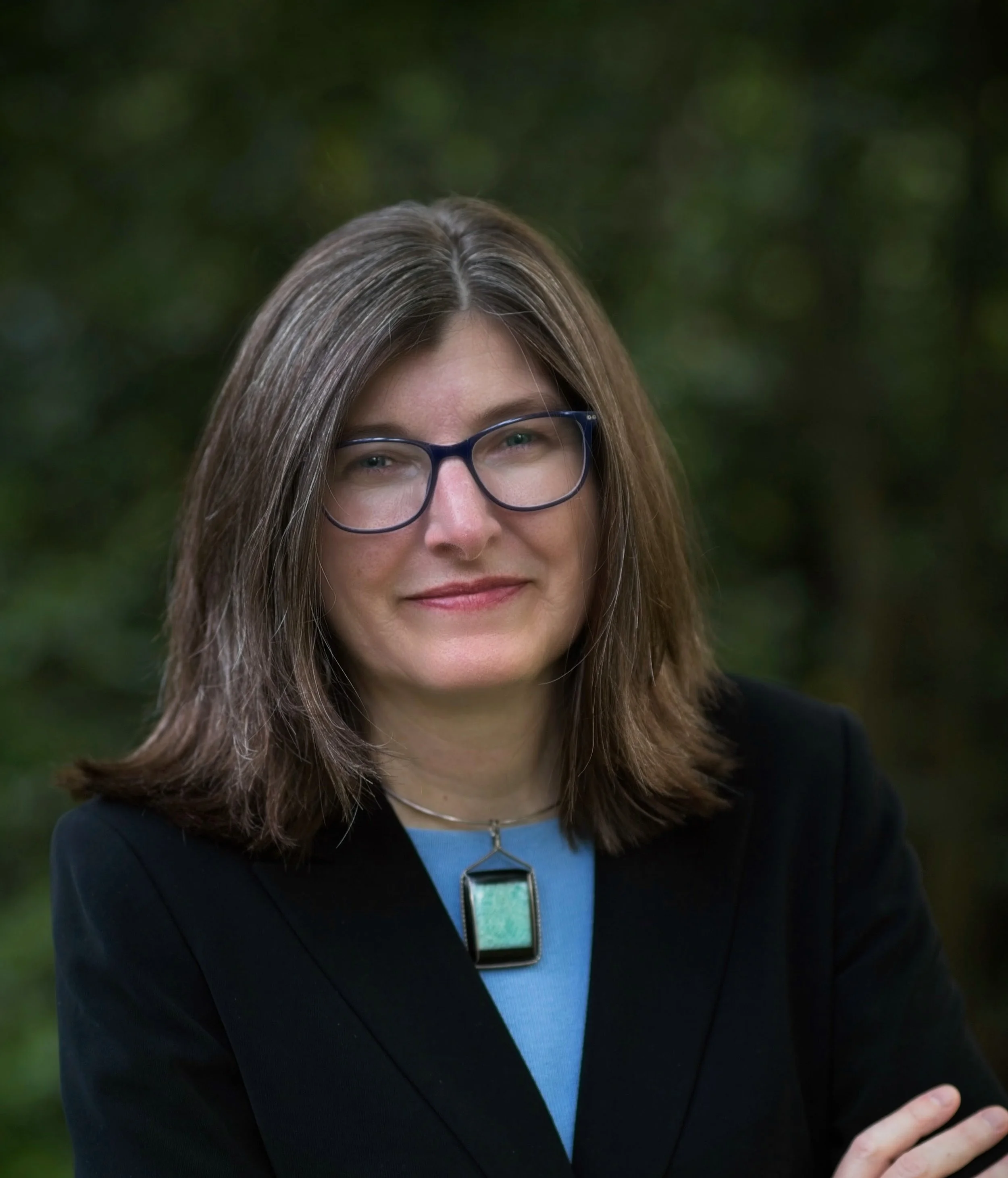
About the Author
With more than 25 years of nonprofit experience, Kelly McFarland Stratman (Oita, 1993-1996) is an American Society of Association Executives–certified association executive (CAE) with a track record of engaging volunteers, fostering dialogue, and promoting transformative change. Kelly is the executive director of the National Council for the Social Studies, the largest professional organization in the country devoted to social studies education. Previously, Kelly was the Chief of Staff at the League of Women Voters of the U.S., where she worked with the organization’s 750 affiliates to empower voters and defend democracy. She is the board chair of AFS-USA, which works to create a more just and peaceful world through intercultural learning and high school exchange programs, through which Kelly lived in Denmark while a high schooler. Kelly’s interest in intercultural learning was bolstered by her time on the JET Program, where she served as an ALT in Oita.
References
[1] Richard Wike and Janell Fetterolf, “Satisfaction with Democracy Has Declined in Recent Years in High-Income Nations,” Pew Research, June 18, 2024, https://www.pewresearch.org/short-reads/2024/06/18/satisfaction-with-democracy-has-declined-in-recent-years-in-high-income-nations/.
[2] Harvard Kennedy School Institute of Politics, Harvard Youth Poll, December 4, 2025, https://iop.harvard.edu/youth-poll/51st-edition-fall-2025?utm_source=newsletter&utm_medium=email&utm_campaign=newsletter_axiosam&stream=top.
[3] Laura Silver, Moira Fagan, Chistin Huang, and Laura Clancy, “What Can Improve Democracy? Ideas from People in 24 Countries, in Their Own Words,” Pew Research, March 13, 2024, https://www.pewresearch.org/global/2024/03/13/what-can-improve-democracy/.
[4] Ayano Takeuchi, “Japan Catches the Deliberative Wave,” Deliberative Democracy Digest, December 18, 2020, https://www.publicdeliberation.net/japan-catches-the-deliberative-wave/; “Citizen Deliberation Meetings (Shimin Tougikai),” Japan Mini-Public Research Forum, accessed August 11, 2026, https://jrfminipublics.wixsite.com/mysite/citizen-deliberation-meetings-shimi.
[5] Claudia Chwalisz, “Japan’s Boom in Randomly-Selected Mini-Publics,” Democracy Next, February 14, 2025, https://demnext.substack.com/p/japans-boom-in-randomly-selected/.
[6] Chwalisz, “Japan’s Boom.”
[7] Catherine Fraser, “Citizens’ Assemblies Can Be a Tool to Build for Our Democracy and Climate,” Data for Progress, February 20, 2025, https://www.dataforprogress.org/insights/2025/2/20/citizens-assemblies-can-be-a-tool-to-build-for-our-democracy-and-climate/.
[8] Tatuyoshi Saijo, “‘Future Design’: An Innovative Approach to Decision-Making,” United Nations University Centre for Policy Research, March 25, 2025, https://unu.edu/cpr/blog-post/future-design-innovative-approach-decision-making/.
[9] “Citizens’ Assemblies and Mini Publics,” New America, accessed January 2026, https://www.newamerica.org/political-reform/research-areas/civic-engagement/citizens-assembly/.
[10] “Climate Assembly Sapporo 2020: Japan’s First Citizens’ Assembly on Climate Change,” Citizensassembly.jp., accessed January 2026, https://citizensassembly.jp/project/ca_kaken/en#:~:text=Since%202019%2C%20citizens'%20assemblies%20on,the%20prefectural%20capital%20of%20Hokkaido.
[11] Ariella Shalev, “Japan's Movement of Future Dsign Councils,”Foundation for Democracy and Sustainable Development, December 15, 2021, https://www.fdsd.org/ideas/future-design-japan/.
[12] Tatsuyoshi Saijo, “Designing the World with Future Generations in Mind,” Intergenerational Foundation, July 23, 2022, https://www.if.org.uk/2022/07/23/designing-the-world-with-future-generations-in-mind/.
[13] “Values,” Haudenosaunee Confederacy, accessed August 11, 2026, https://www.haudenosauneeconfederacy.com/values/.
[14] “Building a Better Future: Civic Engagement & Futures Thinking - A Brief History of the Future,” PBS Learning Media, accessed November 2025, https://illinois.pbslearningmedia.org/resource/civic-engagement-futures-thinking-video-gallery/a-brief-history-of-the-future/.
[15] Keishiro Hara, Ritsuji Yoshioka, Masashi Kuroda, Shuji Kurimoto, and Tasuyoshi Saijo, “Reconciling Intergenrational Conflicts with Imaginary Future Generations: Evidence from a Participatory Deliberation Practice in a Municipality in Japan,” Sustainability Science 14 (2019): 1605–1619, https://doi.org/10.1007/s11625-019-00684-x.
[16] Sigal Samuel, “Tatsuyoshi Saijo Wants to be ‘a Good Ancestor,’” Vox, November 29, 2023, https://www.vox.com/23870374/tatsuyoshi-saijo-economist-research-institute-for-future-design-future-perfect-50-2023.
[17] “Building a Better Future,” PBS Learning.
[18] Saijo, “Designing the World.”
[19] “Future Design Practices,” Research Base for Future Design, Center of Excellence in Advance Research, TechnoArena - Graduate School of Engineering, Osaka University, accessed December 2025, https://www.cfi.eng.osaka-u.ac.jp/fd-research/en/practices.html/.
[20] Chwalisz, “Japan’s Boom.”
[21] Jennifer Davis, “The Haudenosaunee Confederacy and the Constitution,” In Custodia Legis: Law Librarians of Congress (blog), Library of Congress Blogs, September 21, 2023, https://blogs.loc.gov/law/2023/09/the-haudenosaunee-confederacy-and-the-constitution/.
[22] Rebecca Powell, “Why Is Fort Collins Voting on the Hughes Stadium Land, Anyway? How We Got Here,” Fort Collins Coloradoan, November 13, 2025, accessed through https://healthydemocracy.org/press/2025/11/13/why-is-fort-collins-voting-on-the-hughes-stadium-land-anyway-how-we-got-here/.
[23] “Engaging the Community on the Future of Hughes,” Our City Fort Collins, accessed August 11, 2026, https://ourcity.fcgov.com/future-of-hughes/.
[24] Dillon Thomas and Christa Swanson, “Colorado Voters in Fort Collins Approve Bike Park, Multi-Use Area for Former Hughes Stadium Property,” CBS News, November 13, 2025, accessed through https://healthydemocracy.org/press/2025/11/13/colorado-voters-in-fort-collins-approve-bike-park-multi-use-area-for-former-hughes-stadium-property/.
[25] “Lexington’s First Civic Assembly,” CivicLex, accessed August 11, 2026, https://civiclex.org/civic-assembly/.
[26] “Lexington Launches Civic Assembly to Reshape Local Governance,” The Lexington Times, April 9, 2026, https://lexingtonky.news/2026/04/09/lexington-launches-civic-assembly-to-reshape-local-governance/.
[27] The CivicLex Weekly, https://news.civiclex.org/.
[28] Hailey Small, “A Radical Hope That Everyday People . . . Can Make Wise Decisions About How Their Government Works,” CivicLex, March 20, 2026, https://civiclex.org/dispatches-from-the-civic-assembly/a-radical-hope-that-everyday-people-can-make-wise-decisions-about-how-their-government-works.
[29] “Engaging the Community on the Future of Hughes,” Our City Fort Collins.
[30] “Citizen Assemblies: Real Civic Engagement,” National Civic League, September 26, 2024, https://www.nationalcivicleague.org/citizen-assemblies-real-civic-engagement/.
[31] Pam Bailey, “Why is the U.S. Late to the Table on Citizens’ Assemblies?” ProximatePress, June 2024, https://www.proximate.press/latest-stories/when-will-the-united-states-start-taking-citizens-assemblies-seriously.
[32] “Lexington Launches Civic Assembly,” The Lexington Times.

About JETs on Japan
JETs on Japan is a partnership between USJETAA and Sasakawa Peace Foundation USA that features JET alumni perspectives on US-Japan relations. on a variety of topics relevant to US-Japan relations. The publication elevates the awareness and visibility of JET alumni working across diverse sectors and provides a platform for JET alumni to contribute to a deeper understanding of US-Japan relations from their fields.
*Published articles are the opinion of the author and do not necessarily reflect the views of USJETAA or Sasakawa USA.
