
Center Stage: Connecting Yamaguchi Abroad Through Performance & Perseverance
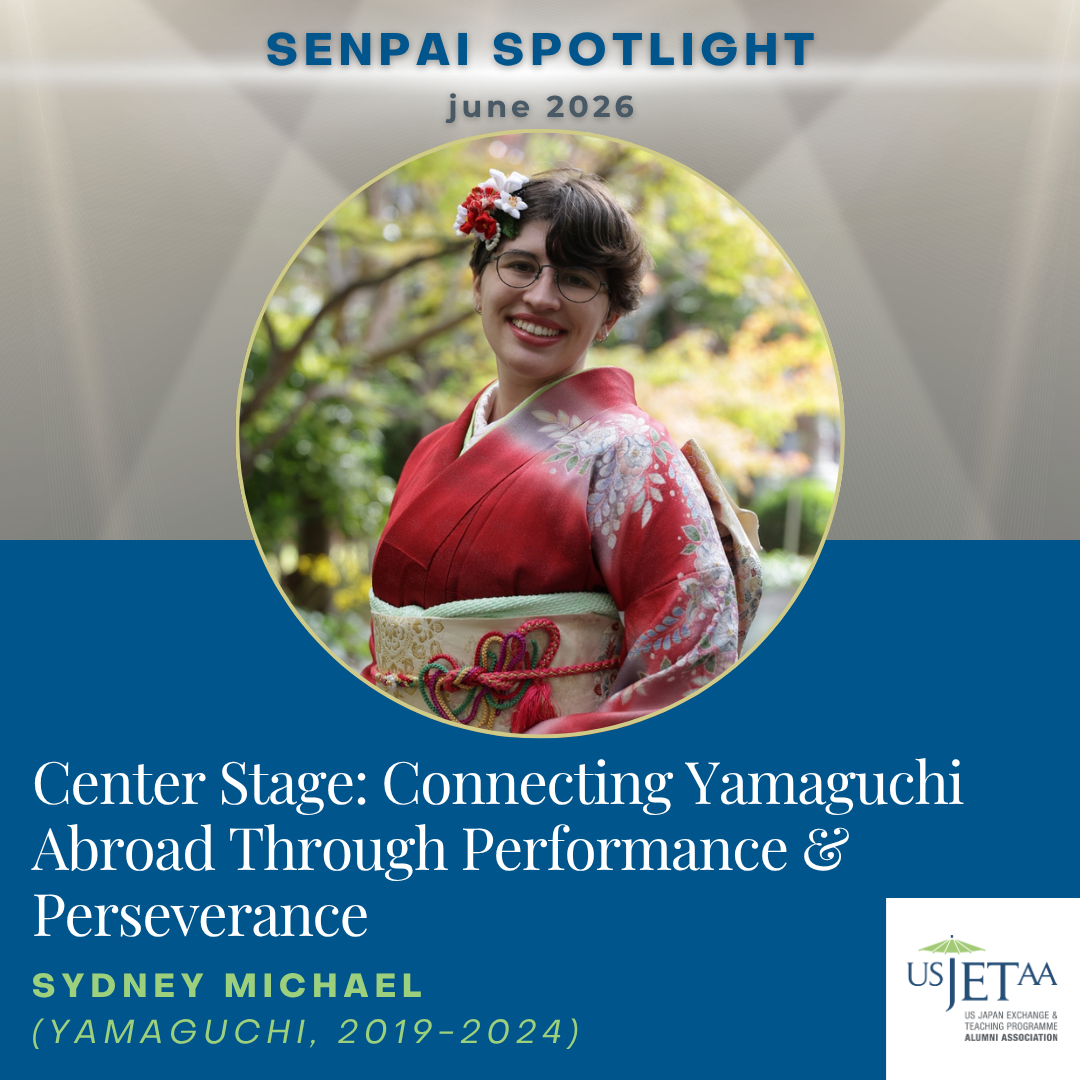
Sydney Michael (Yamaguchi, 2019-2024)
Yamaguchi Global Ambassador
Translator/Interpreter/Media Personality
www.sydneymichael.com
Interviewed by Bobby Nawbary (Aomori, 2024-present)
Sydney Michael’s journey from Wisconsin to the JET Program was anything but straightforward. Connecting the dots of her early experiences with origami, anime, and a unique opportunity to learn Japanese in high school would take her down an incredible path. Sydney’s passion for speaking, theater, and a genuine curiosity about others initially led her to pursue translation and interpreting. However, that was just the beginning, as she quickly found that her ability to connect with the community around her created opportunities she never would have imagined possible, including being a Critical Language Scholarship Program Participant and an integral part of the Hawaiʻi-Yamaguchi Sister-State Agreement signing in 2022. Sydney credits the JET Program with opening doors and helping her develop resilience during the pandemic. She continues to promote cross-cultural connection and hopes current and prospective JETs can learn from her experiences.
How were you first exposed to Japanese culture and why was Japan important for you to experience?
Cold winters and the familiar sounds of tractors across the wide plains of rural Wisconsin are central to Sydney’s memories of growing up in the Midwest. She describes her hometown of about 5,000 people as a quiet junction between two larger cities.
“We were proud of our agriculture. We even had a ‘drive your tractor to school’ day. With only one traffic light in town, installed when I was in high school, it wasn’t the biggest, but even then I encountered things in my childhood that connected me to Japan.”
Inspired by the story of Sadako and the Thousand Paper Cranes, Sydney would fall in love with origami in elementary school, along with starting karate at a dojo in town. Moving into middle school, she was introduced to anime by a friend.
“I wanted to make a thousand paper cranes, and I was keeping track at first. But I think I lost track somewhere around 400.”
“There were many things that led me to Japan indirectly. I remember loving Japanese animation, feeling really connected to the storytelling. That's when I started to dip my toe into learning Japanese, but high school was when I really got the opportunity to dive into it.”
Beloit College in Wisconsin offers the Porter Scholars Program, which allows high school students to take one university course per semester for free during their senior year. Sydney chose Japanese, and despite the difficult courses, she was not overwhelmed by the complexity, but rather, she embraced it.
“Japanese language study hits you hard at the beginning, with multiple writing systems and grammar very different from English. This is certainly overwhelming in the beginning, but once you get the hang of things, it’s an incredible challenge. I like to think of Japanese as kind of like legos. There’s a lot of structure, and once you know certain patterns you can swap them out for each other pretty easily.”
Sydney's perspective can help current JETs reframe their outlook. Sydney's love of communicating in all forms continued to slowly pull her towards Japanese, but she would soon come to a crossroads during her college years.
What led you to apply for the JET Program?
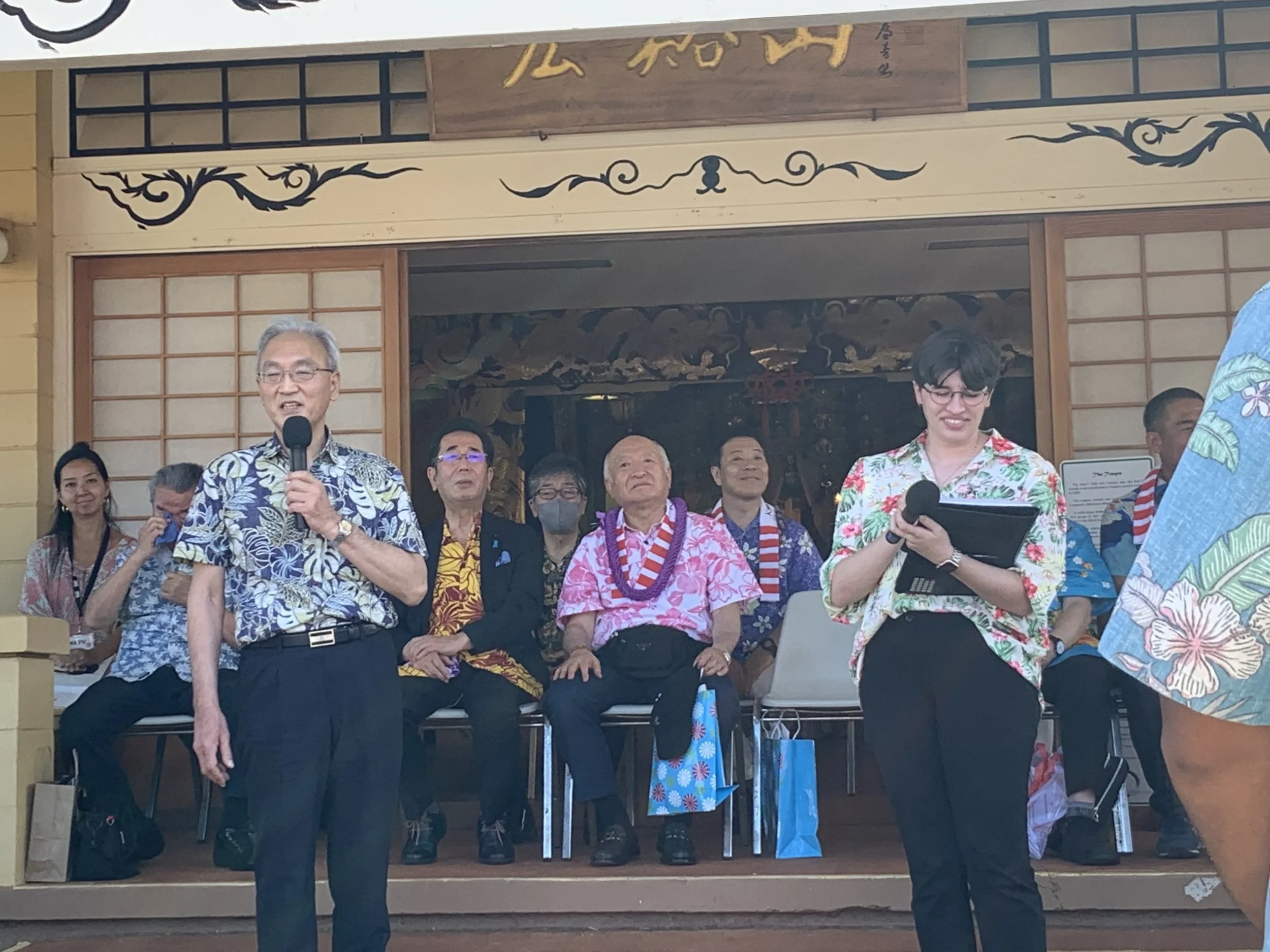
Interpreting for the Vice Governor of Yamaguchi during the first official delegation visit to Hawaiʻi following the sister-state signing.
“My mother likes to say I was born talking… So, naturally, I fell in love with theater and drama early on, and developed a strong interest in public speaking and communication. I chose to continue my studies at the University of Minnesota, knowing I wanted to pursue something involving presentation and performance, though I started as an undecided major to explore my options.”
Sydney arrived at her first university-level theater course excited to learn. However, it was a far cry from what she envisioned, with a disengaged TA who only talked about "breaking free” from the confines of traditional theater, without ever explaining what “traditional theater” was. At this point, Sydney couldn't imagine herself enjoying pursuing a degree in that department, and was a bit lost on where she should take her studies.
“I had a heart-to-heart with my friends, including my roommate and neighbor at the time, and they helped me connect the dots to Japan. I was involved in cultural activities, I was taking Japanese, I had a history with origami and karate, I loved anime… At one point, they said ‘Why don’t you just major in Japanese?’ And it then hit me…I can major in Japanese!”
Officially declaring her major, she would go on to participate in the U.S. State Department Critical Language Scholarship (CLS) Program in Hikone, Japan. This provided her with a unique opportunity to not only learn more of the language in depth but to learn more about herself and why she loves languages and communication.
“I care about people and by learning a new language my heart opens up to a whole new group of people I would not have been able to communicate with otherwise.”
Also during her university career, she interned with the Japan-America Society of Minnesota. It was there she was introduced to the JET Program. She wanted to experience living in Japan and was still not ready to commit to a specific career or role.
You arrived on JET in 2019, right before the pandemic. How did that and your placement affect you?
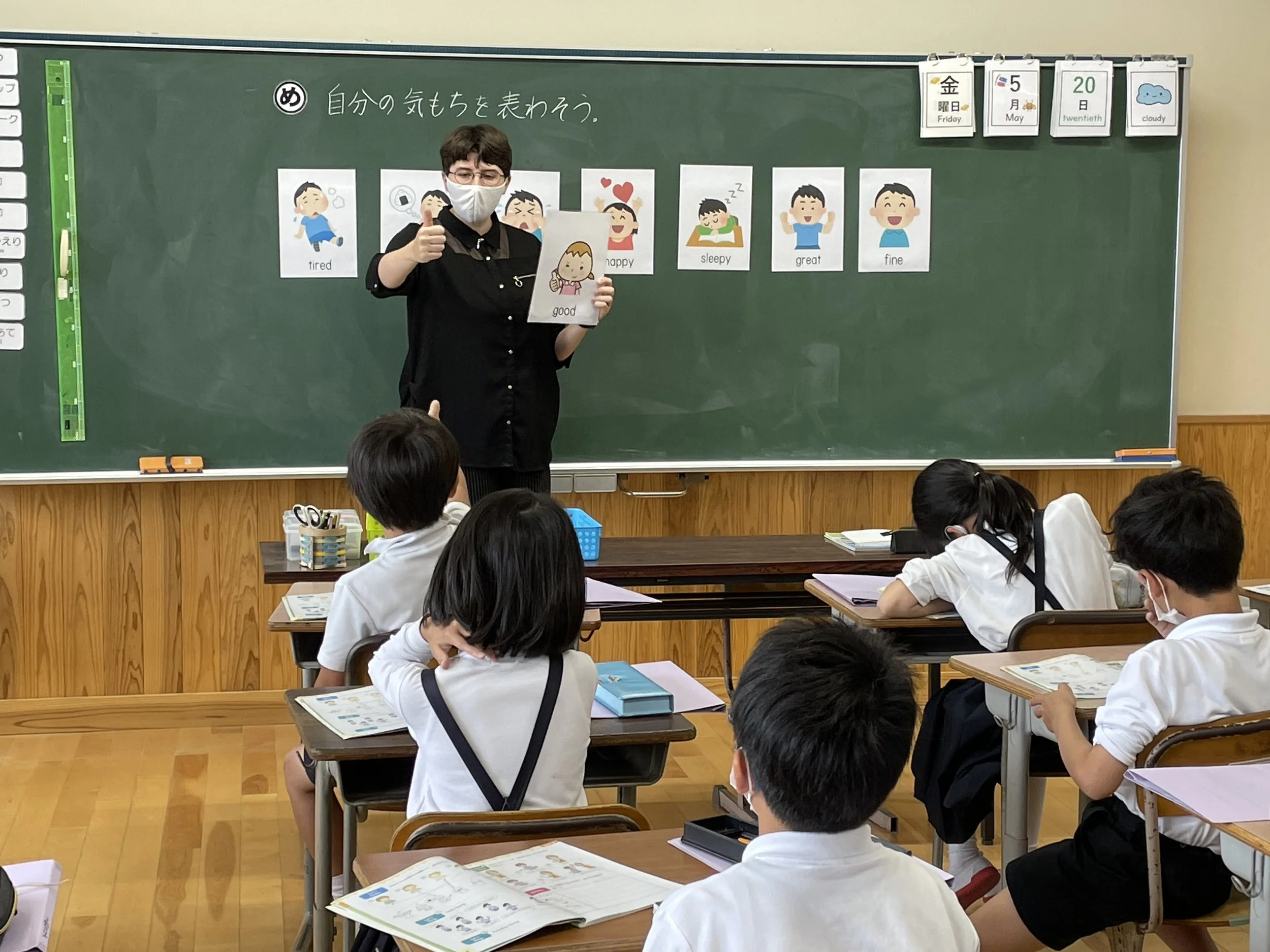
Teaching at an elementary school in Hofu as an ALT.
The ALT position allowed Sydney to play many roles. Much like her theater days, she thrived on variety and felt most engaged when tackling different daily challenges.
“When I initially applied to JET, I left almost all of the preferences questions blank. I didn't care what prefecture, or whether it was urban or rural, but I really wanted to work in elementary schools to be students’ first experience learning English. I was very happy when I found out I got an all-elementary school placement in Hofu, Yamaguchi. While I didn’t know anything about Yamaguchi when I got the placement email, after looking up some more about it, I was surprised that I already had some connections to Yamaguchi. Hideaki Anno, the creator of Neon Genesis Evangelion, is from Ube City in Yamaguchi Prefecture, and I wrote my honors thesis on NGE when graduating from UMN!”
“Being an ALT, especially during the pandemic, was certainly an adventure. I remember coming back on my first vacation since moving to Japan, a trip to the Hokkaido snow festival, and then being met with a flurry of school closures. When JETs left at the end of the year, new JETs couldn’t come in their place, so the number of ALTs decreased quite a bit. I ended up moving to different schools every couple of months. It was very hard to build relationships like that.”
After three years as an ALT, Sydney sought to expand her skillset by becoming a CIR. The current CIR was on her way out and, although not typical, she asked if she could be interviewed by the International Division and transferred to the prefectural office, which was approved. Within just a few weeks of starting her new position, she found herself interpreting for the historic Hawaiʻi-Yamaguchi Sister-State Agreement signing.
“I was immediately thrust onto the big stage. I was prepared to do Japanese-to-English interpretation for the Yamaguchi participants, but one of the other interpreters that day felt unwell and had to leave in the middle of a speech, so all of a sudden I was asked to interpret for the Hawaiian governor on the spot with no preparation. I had to interpret English to Japanese in front of dozens of cameras, reporters, a group of accomplished dignitaries, and many other guests. The speech wasn’t easy either. He mentioned the contract immigration policy from the late 1800s and immigration trends. But my experience in improv pulled through and I was able to hold my head high and give it my all.”
“That was my first time interpreting in person, as everything until then had been on the phone. I figured, if I can get through that unscathed, I can do anything.”
Transitioning out of JET, what kept you in Yamaguchi? What goals did you have?
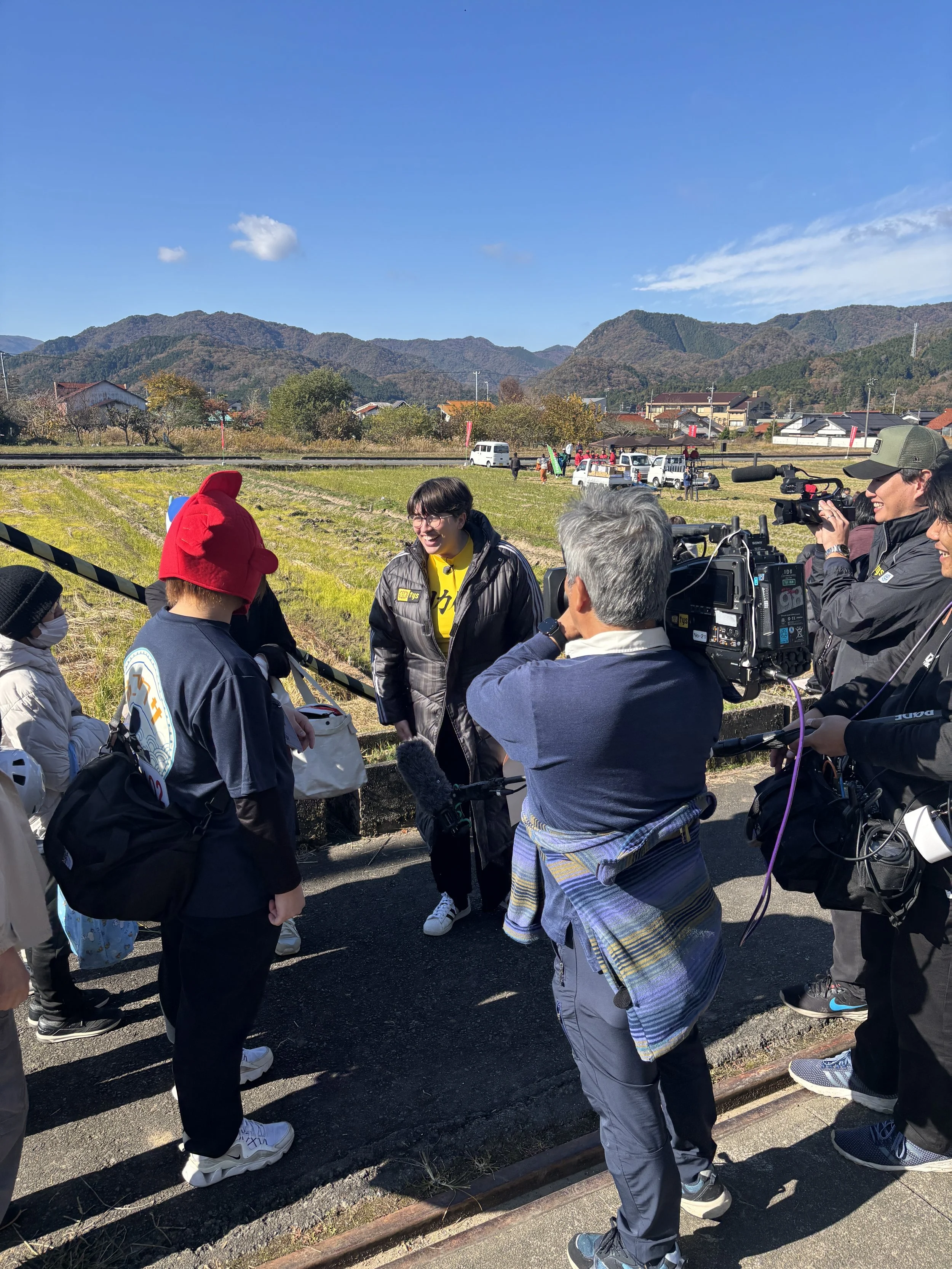
Filming an on-location segment with TYS in Ato, Yamaguchi City.
“When I applied for JET, I had always thought I would go back to graduate school afterwards. I love learning new things and gaining new experience, so once my contract was over I started looking into ways I could pursue higher education. I had just gotten married during my last year on JET and my husband was incredibly supportive of me. I decided to go to Middlebury College for their M.A. in Japanese Language and Culture. I found out about it through the JETAA University Partnership Program, so I have JET to thank for the connection to my graduate studies as well. It’s a hybrid program, with two six-week summers in Vermont and three semesters of online courses, so I just had to figure out how to make the in-person sessions a reality.”
Sydney feels that her time at Middlebury has enhanced her Japanese abilities and helped her gain a new appreciation for the nuances of cross-cultural communication. Sydney continues to be an ambassador for Yamaguchi, including regular appearances on local television as a commentator, working for Yamaguchi Prefectural University’s Global Center, and participating in numerous other community activities.
“I've been studying traditional Japanese arts like Ikebana, and I love photography. These creative hobbies really feed into my work as a cultural communicator. They help me look at Yamaguchi from different angles and share its beauty more deeply.”
Her duties as a specially appointed Global Ambassador for Yamaguchi also keep her busy. Sydney has a variety of hats, for example public speaking. She will be a speaker at several seminars this fall, such as the human rights seminar series events in Shunan City and Yamaguchi City. She shares her other activities, from high-stakes interpretation to personable guiding, on her LinkedIn and personal website.
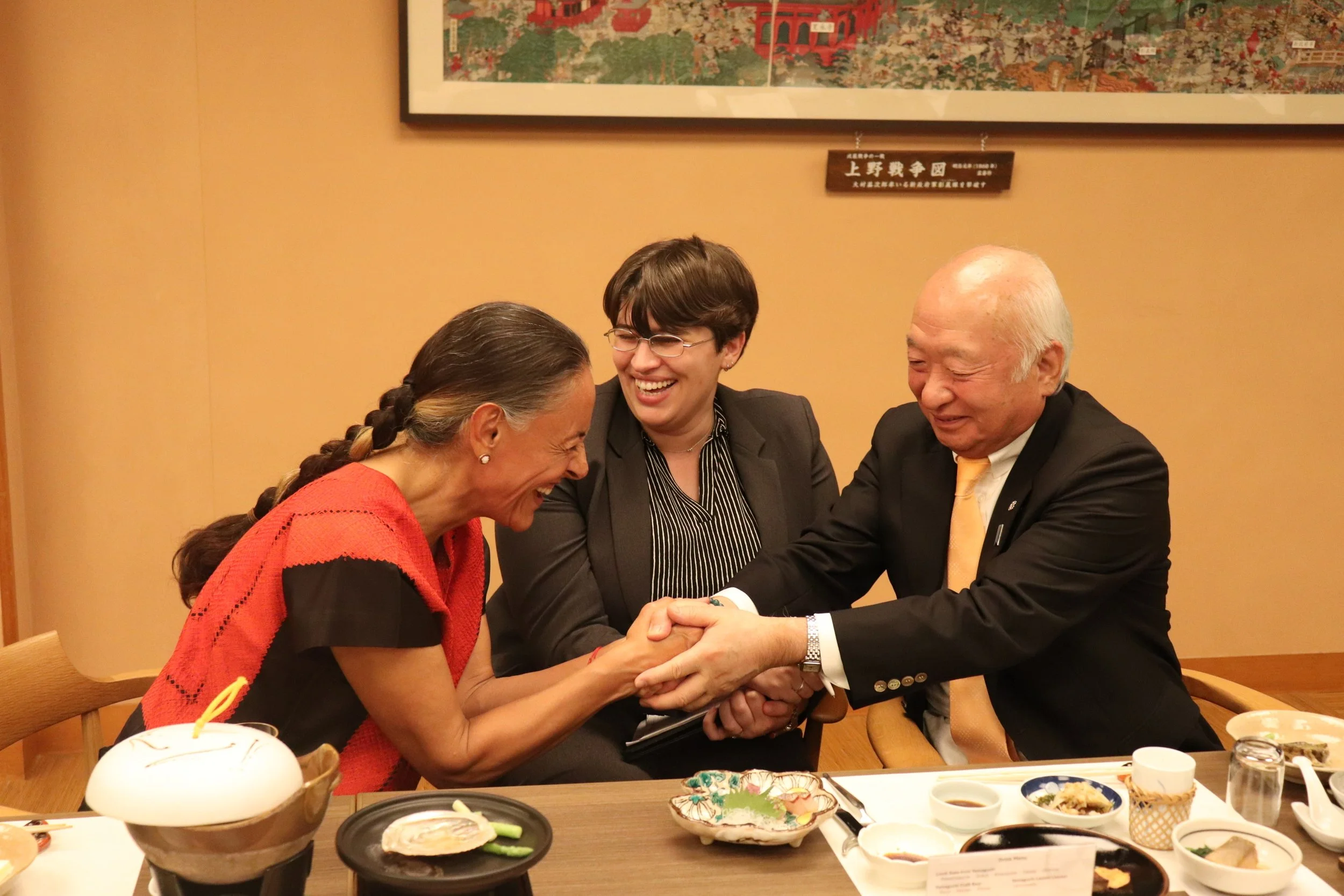
Interpreting for the Yamaguchi Prefectural Assembly Chairperson and the Ambassador of Mexico to Japan.
Do you have any advice for future JETs?
“Being nervous isn’t a setback, or something to avoid. It just shows that you care about what you're doing, and if you don’t care about what you’re doing, then why are you doing it?”
“I’d also say that you can build a strong support system and community anywhere, and things don’t have to turn out exactly as you planned for them to have turned out well.”
Sydney’s journey through the JET Program shows that turning points happen at any time. Those moments can build momentum and often there isn’t one role, one job, or one title that JETs need to strive for. Adaptability and perseverance remain a JET's greatest assets, helping anyone perform confidently on the big stage.
About Sydney Michael (Yamaguchi, 2019-2024)
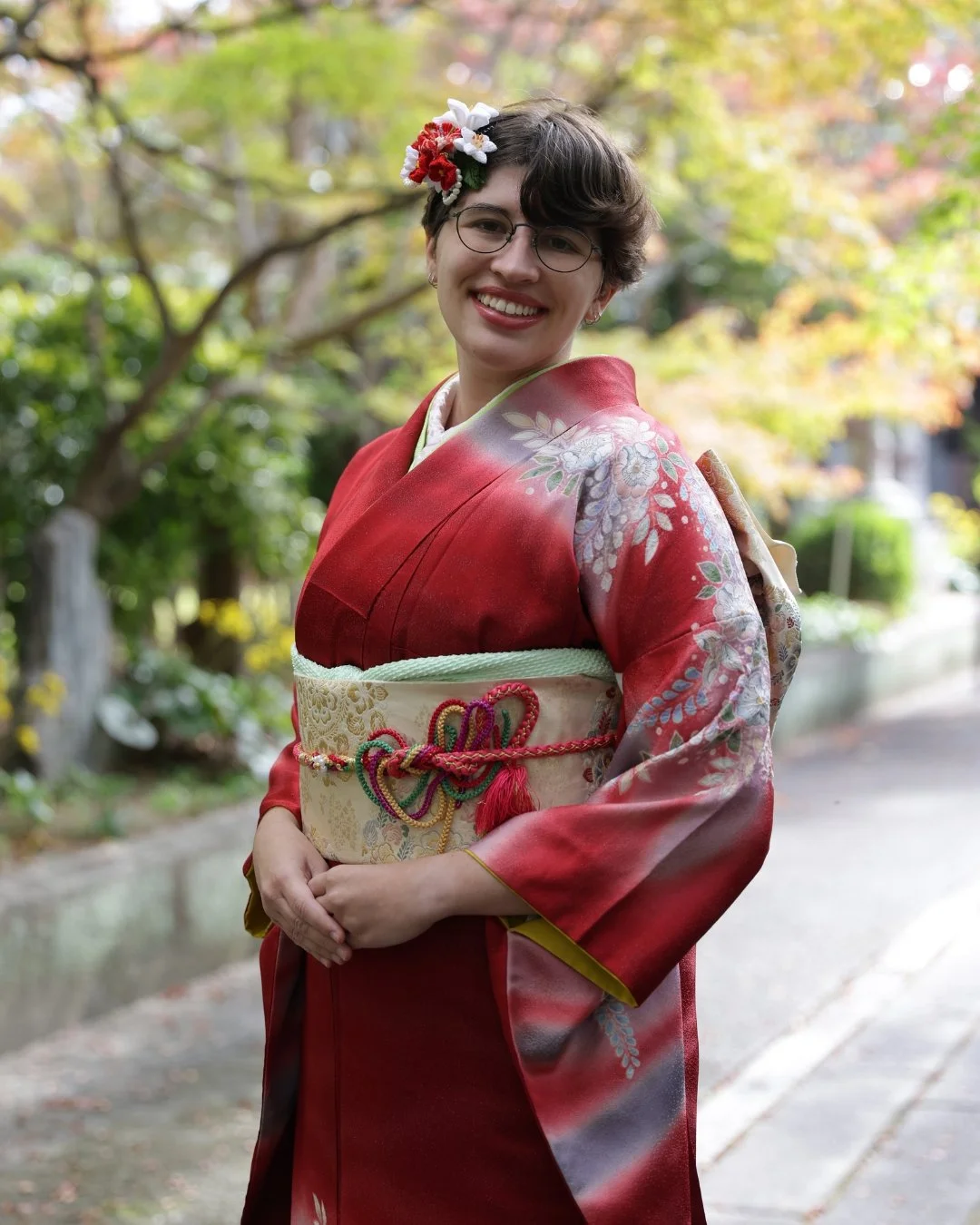
A five-year participant on the JET Programme (ALT and CIR), Sydney Michael is a Yamaguchi Global Ambassador and professional JPN↔ENG interpreter. As a regular news commentator for TYS mix and featured on NHK, she focuses on bridging the gap between Japan and the world through language, media, and cultural insight.
Learn more about her work at www.sydneymichael.com.
The Senpai Spotlight series is brought to you through partnership between USJETAA and AJET’s CONNECT Magazine. The series features JET alumni from the US who have made successful careers for themselves in various fields—with the goal of inspiring young JETs and JET alumni to pursue their own dreams while also offering some words of advice only a senpai could know.
If you, or someone you know, would like to be featured as a Senpai Spotlight, please reach out to us at contact@usjetaa.org.
This edition of Senpai Spotlight was written by Bobby Nawbary, a passionate writer who recently graduated with a Masters in Teaching English and found his way to Aomori with the JET Program. His interest in language and culture has led him to volunteer within State Department cultural exchanges and international student programs. He currently serves National AJET as Director of Professional and Educational Development and enjoys presenting his research at various conferences which involves helping students transition into higher education and become lifelong language learners. You can see more from Bobby at Good Morning Aomori, a long-standing JET-run publication.
