
A Lifetime of Exploring Potential: Foundations into US-Japan Alliance Building
Shanti Shoji (Kagawa, 2002-2004)
Director of Programs at the Sasakawa Peace Foundation USA (Sasakawa USA)
Co-Founder and Board Member of Kizuna Across Cultures (KAC)
Board Member of the American Friends of the International House of Japan
Interviewed by Bobby Nawbary (Aomori, 2024-present)
Shanti Shoji calls three places home: Oregon, Japan, and Washington, D.C. Her journey to JET, which led to a successful career in US-Japan relations, was not what she expected. Shanti's commitment to exploring her passions, along with her mother’s invaluable influence on her, was her north star. Shanti graduated from the University of Oregon with majors in Japanese Studies and International Studies and would later complete her Masters in International Communication at American University’s School of International Service in Washington, D.C.
Having participated in international youth programs herself, her career has been mostly focused on giving back. Her extensive experience in Japan has led her to Sasakawa Peace Foundation USA, a cornerstone in the US-Japan alliance space, where she works as its Director of Programs.
Growing up in Oregon, how were you exposed to all things international?
Shanti grew up just outside Portland in Milwaukie, Oregon. Her life included a mixture of suburban, urban and rural environments. Shanti recalls some of her fondest memories at her grandparents’ wheat farm tucked away in Grass Valley’s high desert; riding the combine with her grandfather as he harvested wheat and baking with her grandmother in the kitchen.
“Where my grandparents raised my mom was a small town of about 200 people. My mother was able to experience living abroad when she was younger. As a result, I was exposed to the international side of things growing up.”
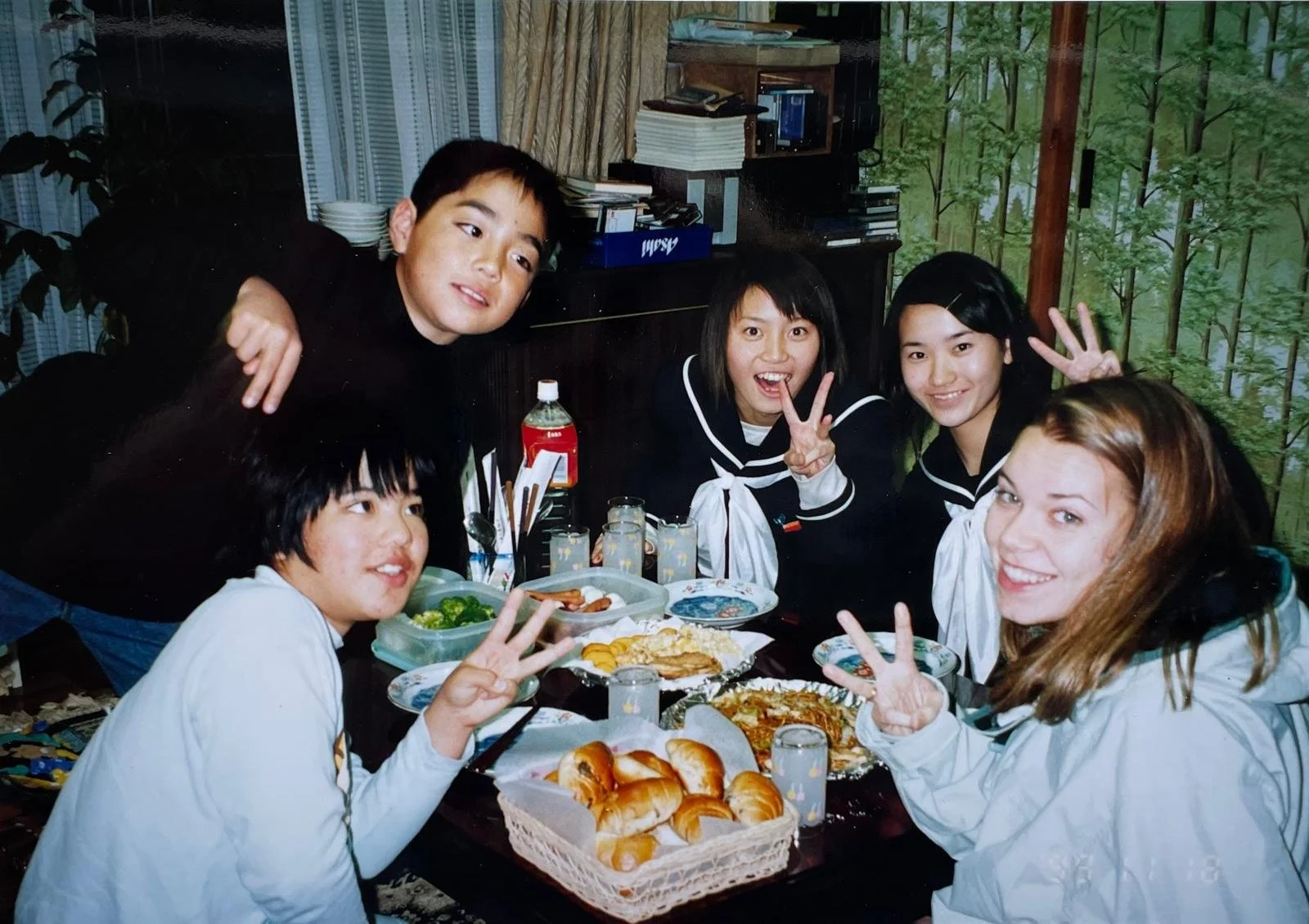
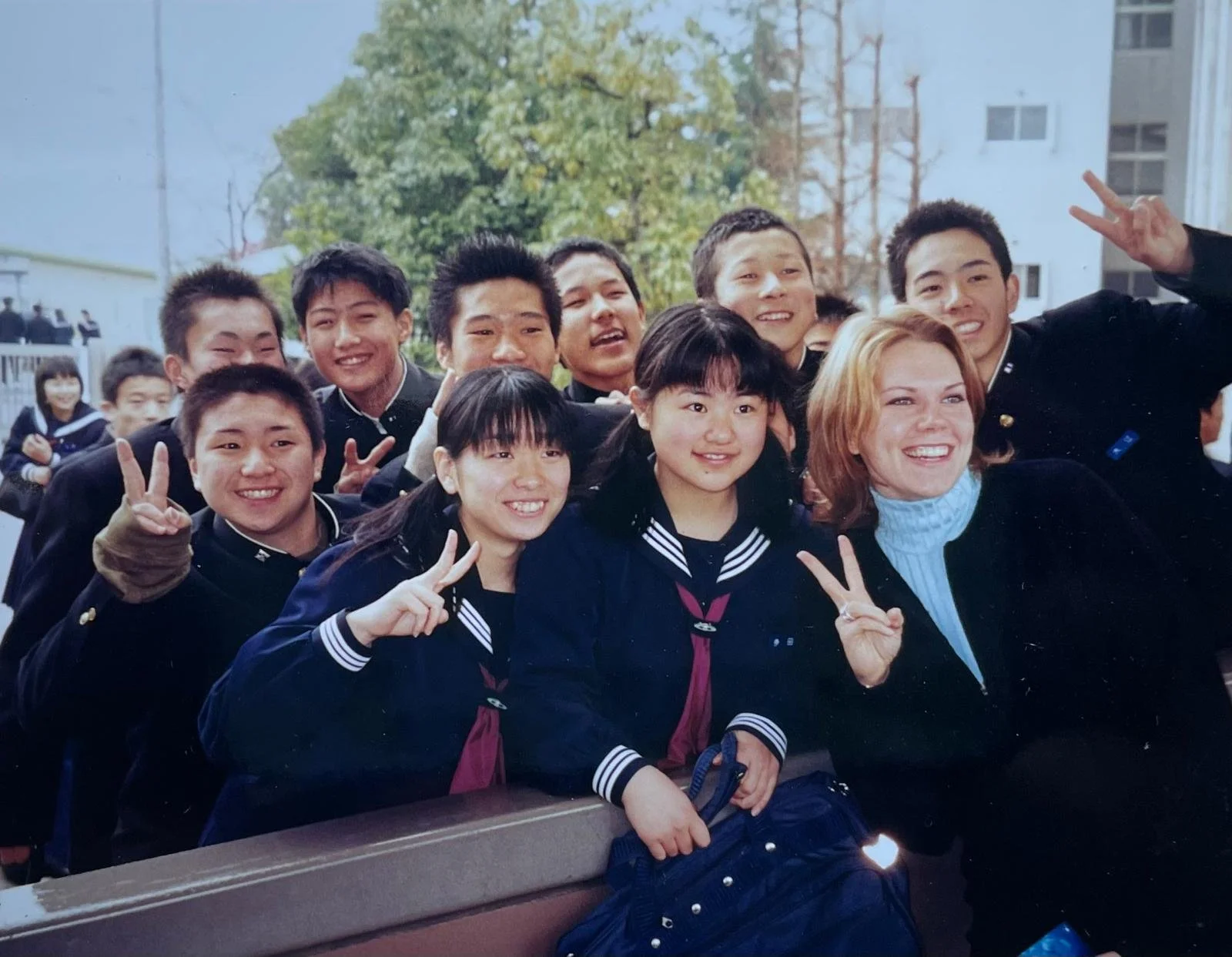
Shanti visiting with Japanese students at a LABO party.
Shanti's family had a unique connection to the outside world. Her grandmother was an AFS coordinator in central Oregon and would host IFYE (International Farm Youth Exchange) participants from around the world. As a result, Shanti’s mother, Cathy, participated in IFYE , spending six months in Nepal in 1972. The experience was transformative for her mother. So much so that her daughter’s first and middle name would be inspired by her time in the country. Derived from Sanskrit, Shanti means peace in Nepali.
Cathy valued exchange programs and Shanti's family would go on to host multiple international guests.
“I essentially gained an extended family. From there, you can say the seed was planted. My mother always encouraged me to see the world for myself. So I did! When I was 13, my mother was a chaperone and took her high school students to Toyama as a part of the sister state/prefectural program. I tagged along and stayed with a Japanese family in Toyama while she was with her students.”
Shanti's time in Japan was eye-opening for her. She found herself surprisingly comfortable with living in Japan. Shanti was interested in exploring as much of Japan as possible, delving into its food, people and the culture and her teenage love for all things related to Sanrio's Kerropi. Eventually her fascination with Japan grew into a desire to have a deeper connection with the country and people.
“After that initial experience in Japan at the age of 13, I was convinced that when I became an adult, I wanted to be able to travel to Japan for work. I had no idea what that may look like or how I would even make it happen, but it was what I wanted.. I think I felt that in part because my mother really nurtured my desire to explore and supported my curiosity in all things Japan.”
During your undergrad, you took a bit of a risk trying to live in Japan. I’m curious why you decided to do that ?
“I was majoring in Japanese at the University of Oregon in Eugene, and there was an opportunity for me to intern with LABO International Exchange Foundation (LABO) my sophomore year. I felt this was a great opportunity and thought I could get some credits for it. Unfortunately, I was told it wouldn’t count towards my Japanese B.A., so after lots of research, I found I could get international intern credits if I was majoring in International Studies, so I decided to double major.”
Shanti’s resourcefulness and willingness to make things happen paid off as she was able to still graduate on time. As part of her internship, she traveled all over Kyushu and the Kanto region, staying at over 50 Japanese homes, often in the more rural parts of those regions. Juggling her college work, internship, and the unpredictability of day to day life as she traveled to meet Japanese families and youth was challenging for her. Shanti knew she wanted to continue living in Japan, and she thought her experience and adaptability could be valuable assets on the JET Program.
How was JET different from your previous experiences in Japan?
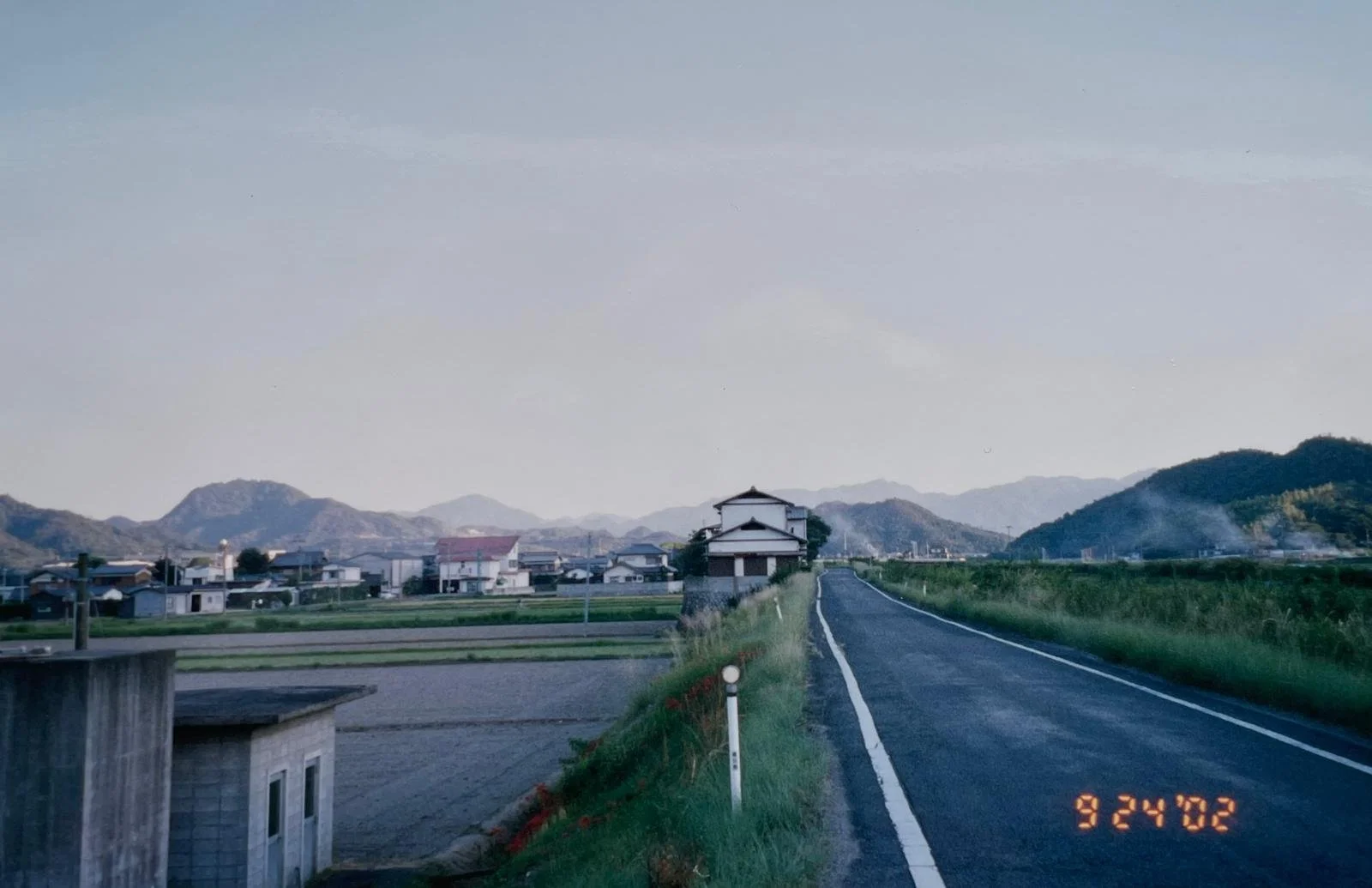
The view from Shanti’s bike ride home in Kagawa while on JET.
“Being on the JET program, in Kagawa, was different. I was able to settle down a bit, make connections, and my path became clearer. The Kagawa mountains, living next to a beach with the famed Matsubara trees, and the simplicity of a slower life, intertwined with nature was perfect for me. I was able to really enjoy the nature there and make many meaningful connections.”
Shanti's favorite memory of the JET Program was of the people she met.
“Every morning, my JTE, Kume-sensei, would pick me up and load my bicycle into the back of his truck so that I could leave school on my own and not wait for a teacher to take me home. I remember he loaded my bike into his car even though it would sometimes leave grease stains on his clothes. He was essentially giving me autonomy. He was so welcoming and always checked in on me. He also invited me to his BBQ parties at the nearby park where he’d be cooking up the most interesting food! In addition, there were the local udon shop owners who treated me like family and my students and fellow teachers who I truly enjoyed connecting and working with. Other than Oregon, I really felt like I had found another home.”
After two years on the JET Program, she was not ready to leave Japan. She wanted to revisit her youth exchange roots and was able to secure a position with LABO at their office in Tokyo.
At this point, you’ve been living abroad for nearly five years, despite your strong ties to Japan, you decided it was time to further your education in Washington, D.C… The atmosphere seems like it would clash with your values and what you are used to…
Shanti with students in Kagawa during her ALT days on JET.
“I felt there was more for me. I wasn't looking that far ahead into my life, but I was fascinated by how culture impacts how we communicate, and I had always wanted to pursue higher education. I wanted to go to grad school in the States and the best fit for my interests happened to be in D.C.”
Following grad school, she landed a job at the Embassy of Japan in the U.S., where she spent three years as the Cultural Affairs Coordinator. In 2011, on the heels of the Great East Japan earthquake, she co-founded KAC (Kizuna Across Cultures) with Ayako Smethurst and other former JETs and Japanese living in D.C.
“We wanted to help Japan in some way and started putting our heads together on what we could do with little to no financial resources. Ultimately, we created the virtual bilingual cultural exchange program, Global Classmates, that has now connected nearly 20,000 students across hundreds of high schools in the U.S. and Japan with cultural exchange opportunities. Raising the morale of the youth who had been impacted in Tohoku was important to us and we wanted schools to be able to participate at no cost.”
Shanti's days were quite busy; she even took up a part-time job at a local Izakaya in D.C. to help pay her bills while the non-profit was in start-up mode.
“At this point in life, I was working a lot. I had never been one to really care that much about making money, but I needed something sustainable. I had worked in non-profits and youth exchanges for a long time. Luckily, I had built a lot of connections in the D.C. area, which ultimately led me to learn about the opening at Sasakawa USA. I had years of experience developing and running programs, but didn’t have experience working on issues related to national security within the U.S.-Japan relationship. They gave me a chance, and I am forever grateful that they did.”
As the Director of Programs for six years, Shanti has found a home professionally that has continued to feed her passion for strengthening the U.S.-Japan relationship, leading initiatives at Sasakawa USA that bring partners from both countries together to apply Women, Peace and Security, advance disaster risk reduction, and build whole community resilience through shared learning and collaboration Her path to Washington and Sasakawa USA was difficult, but her perspective and experiences in Japan make her a unique and invaluable person in that role.
How has JET helped you, and what advice would you give current JETs and those looking to find their own path?
“Follow what you're interested in. I know many JETs are far from home and trying to figure things out. Even when I missed my family and felt like giving up at times, my mother told me. 'I gave you wings so you could fly'. That's what being a JET is- it’s exploring and following your ikigai. Simply feed what makes that grow. Create and chase those opportunities.”
About Shanti Shoji (Kagawa, 2002-2004)

Shanti Shoji, Director of Programs at Sasakawa USA, manages the organization’s portfolio of grants and initiatives which are focused on U.S.-Japan security and diplomacy. Her career has included six years in Japan and nearly two decades in Washington, DC, working across U.S.-Japan grassroots diplomacy, cultural affairs, and foreign policy. At Sasakawa USA, Shanti has led policy-relevant research exchanges and bilateral dialogues that bring together officials, experts, and civil society to generate concrete recommendations for the U.S.-Japan alliance. She has developed and led initiatives that integrate Women, Peace and Security (WPS) into alliance strategy, establishing herself as a key voice on WPS in U.S.-Japan policy discussions. Previously, she taught English in Japan on the JET Program and co-founded the educational non-profit Kizuna Across Cultures. She holds a master’s degree in international communication from American University and bachelor’s degrees in Japanese and international studies from the University of Oregon.
The Senpai Spotlight series is brought to you through partnership between USJETAA and AJET’s CONNECT Magazine. The series features JET alumni from the US who have made successful careers for themselves in various fields—with the goal of inspiring young JETs and JET alumni to pursue their own dreams while also offering some words of advice only a senpai could know.
If you, or someone you know, would like to be featured as a Senpai Spotlight, please reach out to us at contact@usjetaa.org.
This edition of Senpai Spotlight was written by Bobby Nawbary, a passionate writer who recently graduated with a Masters in Teaching English and found his way to Aomori with the JET Program. His interest in language and culture has led him to volunteer within State Department cultural exchanges and international student programs. He currently serves National AJET as Director of Professional and Educational Development and enjoys presenting his research at various conferences which involves helping students transition into higher education and become lifelong language learners. You can see more from Bobby at Good Morning Aomori, a long-standing JET-run publication.
