

Ryan Shaffer (Aichi, 2001-2003)
Interviewed by Marco Blasco (Aomori, 2021-2024)
There are always common threads that emerge during conversations with JETs about the JET Program. Everyone has had life changing experiences and memories they will never forget. For many of us, learning to quantify the JET experience is something that takes many years to actually do, and only in hindsight do we ever really get a sense of how that experience really affected us.
That's why it was enlightening to speak with Ryan Shaffer, President of the Japan America Society of Washington, D.C. (JASWDC). His fresh perspective on the JET Program and what it means to be a JET really opened my eyes in ways that I hadn't realized before.
Ryan’s journey started out similarly to many prospective JETs. After attending Bates College in Maine, Ryan's interest in Japanese food and baseball led him to Japan. In particular, he was a fan of Hideo Nomo of the Los Angeles Dodgers. After applying to JET during his senior year, he was accepted and headed off in the summer of 2001. He told me that he had wanted to be based in northern Japan, but as JET fate might have it, he wound up in Aichi Prefecture.
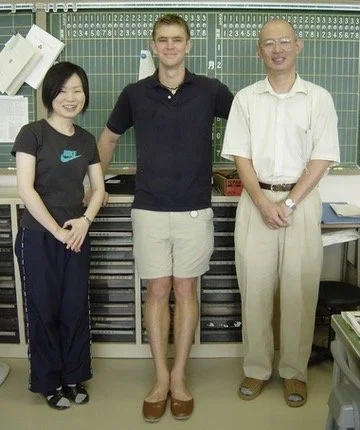
Ryan with a couple of his JTEs while on JET.
Not long after arriving in Japan, however, the 9/11 terrorist attacks occurred, and this event would shape Ryan's career trajectory and his path forward. Of course, 9/11 shaped the social consciousness of many Americans and people around the world, and Ryan, like many, found himself considering how he could have a positive impact on the world. Being abroad at the time during 9/11 had a considerable impact on him, and led him to pursue a career in international affairs after JET. At the time, he thought that the rise of China as a global power meant his skills would be best used there and he obtained his Master's Degree in Asian politics, with a focus on China. However, he soon realized that the country was in much greater need of Japan experts than it was in need of China experts. There was a genuine scarcity in that regard. He told me that the JET Program prepares people to be Japan experts, but if the world only wanted Japan experts, Japanese people would fit that role. So what is truly important is how JETs wield their expertise and what else they bring along with it. In Ryan's case, it was seeing how Japan was one of the closest allies and investors in America and pursuing a path where he could continuously strengthen the relationship between Japan and America.
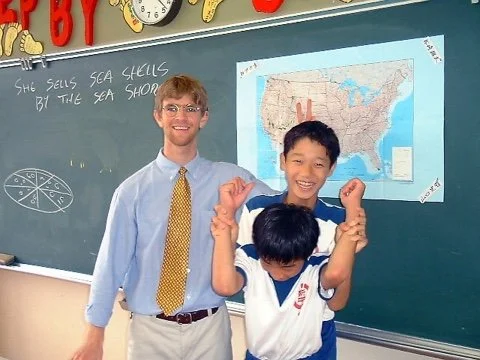
Ryan with students.
We spoke as well about the challenges of the program and how his own JET experience reflected them. Ryan mentioned that sometimes there can be a unique tension when the JET participant wants a different experience than the program does. Many JETs are very eager to insert themselves and become a part of the community and the classroom, but sometimes reality can be more complex. There are more difficult schools where students may not always be eager or willing to learn English, as Ryan had experienced at one of his high schools. Sometimes the Japanese teachers of English are very busy and do not have much time to dedicate to building a relationship with the ALT. That is where, Ryan mentioned, being adaptable is a crucial part of the JET experience. In fact, it is really a requirement in order to be a good cultural ambassador. I echoed that sentiment. Thinking back to my own JET experience, I can't count the number of times that merely paying attention to a change in schedules or an announcement on the board in the teachers' room saved me from some potentially awkward situations.

Aichi-ken’s Hadaka Matsuri, 2003
In many ways, Ryan's current position as President of the Japan America Society of Washington, D.C. is the ultimate version of cultural ambassador. The JASWDC is focused on the bi-national relationship between the two countries, and invests in the ties among people through cultural events and other programs, such as the Japan Bowl language competition, the Sakura Matsuri, and the U.S.-Japan Capital Gala. He mentioned that there are many organizations that focus on the governmental side, or the "hard power", and many organizations that focus on the cultural or "soft power", but the goal of the JASWDC is to combine both those hard and soft power worlds and bridge the connection between countries through the people.
When I asked about his advice to JETs, Ryan said not to treat the program as a paid vacation. It can be tempting to do so, but often, at the end, you are left wondering what you truly have gotten out of the experience. Instead, treat the JET Program like the most important job you've ever had, because it likely is. Treat every contact like someone who might help you in the future, whether that is in future career prospects or as a lifelong friend. There are many ways to build ties, and the most successful JETs learn how to build those ties in different ways.
Ryan's wisdom and professional experience were eye opening to me. He showed me that the way in which we think about our experiences and how we convey them to others, is just as important as the experiences themselves. As JETs we often have a sense of what our time in Japan has meant, but it takes thoughtfulness to dig into how that can impact our futures and our lives. We could all learn something from how Ryan is able to articulate that and put his words into practice.
About Ryan Shaffer (Aichi, 2001-2003)
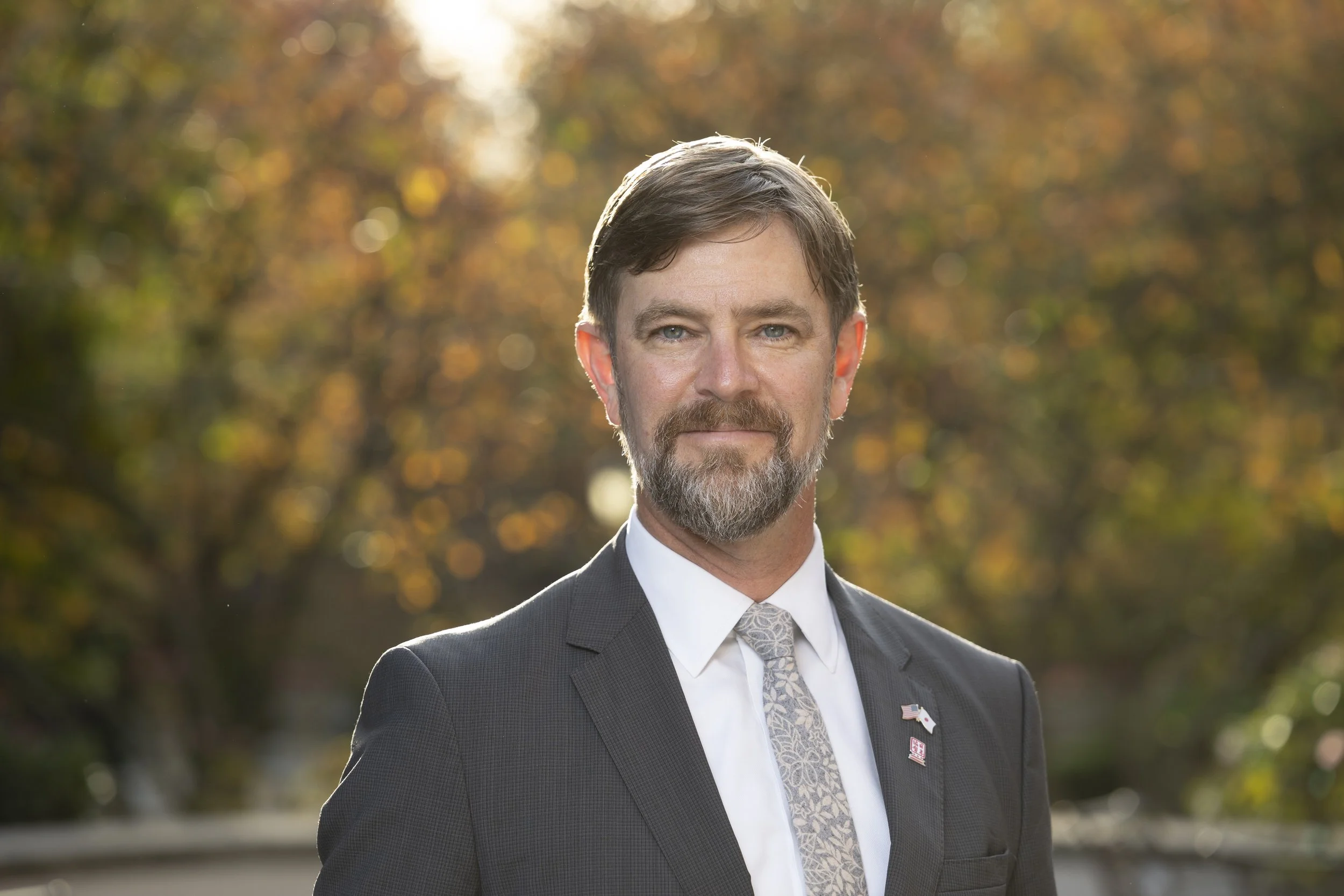
Ryan Shaffer has served as president of the Japan America Society of Washington DC since February of 2019. He previously served as Director of Programs and Development at the Maureen and Mike Mansfield Foundation, where he oversaw integration of programmatic efforts to advance shared interests in U.S. relations with Japan and other NE Asian Partners.
Mr. Shaffer was the founding director of the Mansfield Foundation’s U.S.-Japan Space Forum and the U.S.-Japan Nuclear Working Group and has produced a variety of publications on the topics. Prior to joining the Mansfield Foundation, Mr. Shaffer served as a research analyst for the Federation of Electric Power Companies of Japan and also spent two years in Aichi Prefecture, Japan as a JET Programme participant from 2001-2003.
Mr. Shaffer, who was raised in Portland, Maine, has an MSc in Asian politics from the University of London’s School of Oriental and African Studies and a BS in environmental policy from Bates College. Mr. Shaffer sits on the Board of Directors of the Western Pacific Fellowship Project and serves as an advisor to the Sake Brewers Association of North America. He is the founding member of the committee to commemorate the father of Japanese baseball, Horace Wilson.
The Senpai Spotlight series features JET alumni from the US who have made successful careers for themselves in various fields—with the goal of inspiring JETs and JET alumni to pursue their own dreams while also offering some words of advice only a senpai could know.
If you, or someone you know, would like to be featured as a Senpai Spotlight, please reach out to us at contact@usjetaa.org.

This edition of Senpai Spotlight was written by Marco Blasco, a writer and editor based in snowy northern Japan. Originally from America, his interest in Japanese culture and religion brought him to Japan through the JET Program in 2021, where he has made a second home for himself.
