
Not in Kansas (City) Anymore: From JET to International Educator
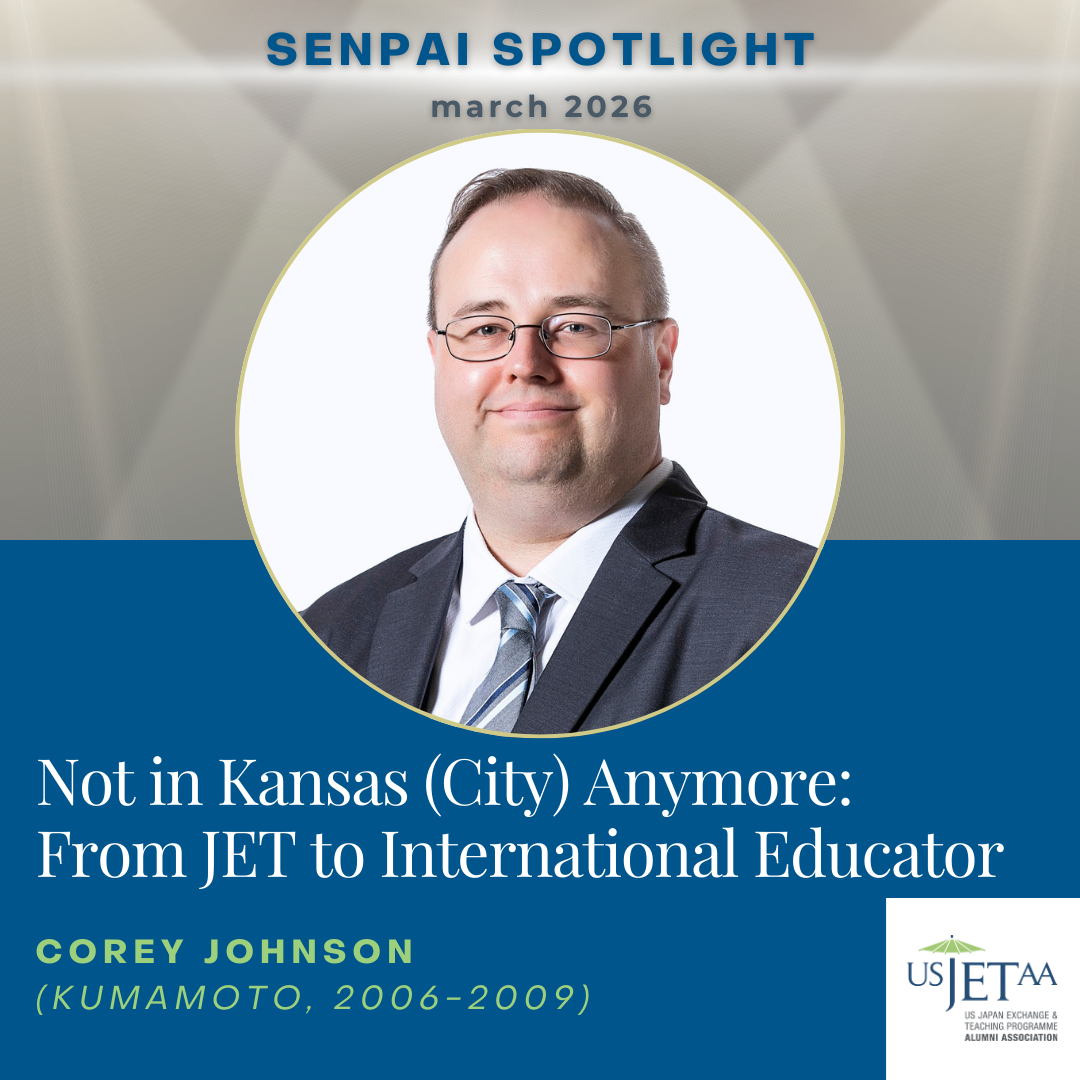
Corey Johnson (Kumamoto, 2006-2009)
Interviewed by Marco Blasco (Aomori, 2021-2024)
Before I even sat down to talk to Corey Johnson, I was already itching to ask questions. One look at his LinkedIn page had told me only part of the story, that much I knew. His work history was filled with schools all over Asia. From the Philippines to China to Korea. What could the path of a person who had spent almost all of their professional life overseas be like, I wondered. What stories could someone like that tell?
From the moment we got on the call, Corey was humble, and his story starts out just as unassumingly.
Originally from Clarinda, Iowa, Corey attended and graduated from Northwest Missouri State, after which he landed his first teaching job at a small school outside of Kansas City. He was the only social studies teacher, and had always been interested in Asia and Japan. But his desire to actually travel was only sparked when one of his students asked him if he had ever been to Japan. At that moment, the seed was planted. He began researching opportunities and ways to visit and work in Japan. Corey wanted a deeper experience, something more than merely visiting the place. He started wondering, why wouldn’t he travel there? Perhaps he could learn more about the history firsthand. In his research, he found the JET Program and, as a young teacher, thought that it gave him the best opportunity.
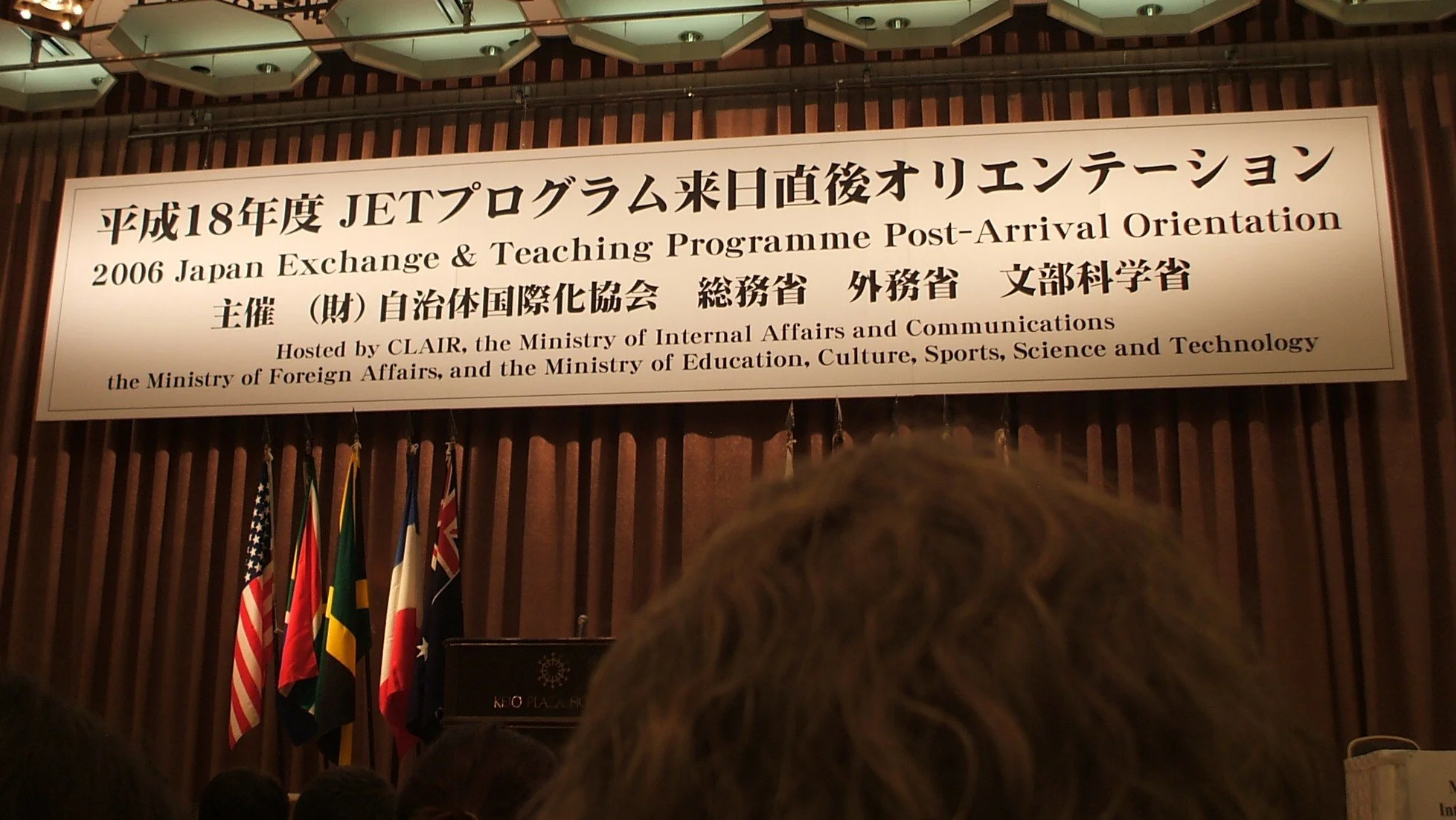
A familiar image to all JETs no matter what year you attended Tokyo Orientation at the Keio Plaza Hotel.
Corey was the first person from his hometown to go on JET, and he was actually placed in Tamana in Kumamoto Prefecture, the sister city of his town. Though he had previously met a few Japanese visitors to his town through a local festival, this was going to be his first true foray into Japanese culture, language, and living abroad. He faced some disbelief from others in his small town, and the local newspaper even featured him in an article. However, despite the nerves and unassuredness that being a first time JET always brings, he set off.
Corey came to Japan with little Japanese experience and a paper dictionary. He was shown around town on his first day by his kyoto-sensei who Corey said knew about three words in English: "school", "house", and "remember." But Corey got the message--remember his way to school. It was in this way that his journey began. He was forced to adapt in order to survive and he talked a lot about setting aside his expectations and predispositions in order to embrace Japanese culture. I know from my own JET experience that it is natural to want to resist what comes our way. Corey's ability to be adaptable is one skill from his JET days that translated directly to his future career success.
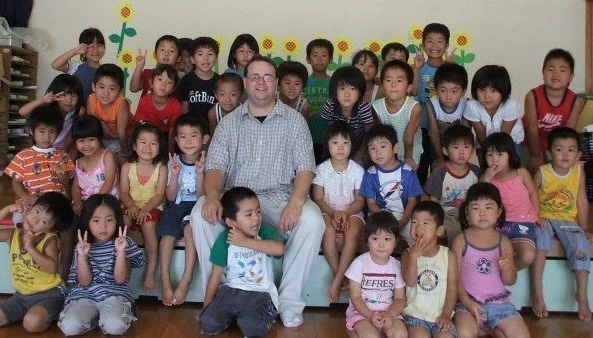
Corey with his kindergarten students in Tamana, Kumamoto during JET.
Corey began to study Japanese and open lines of communications with his fellow teachers. He bridged the cultural gap by having lunch with the other teachers and helping to serve lunch to the students. Corey made an effort to use Japanese, making it a point to know the school schedule and not relying on the other teachers to tell him when and where to be. Whereas the teachers might have originally thought they would burden him by handing out a schedule in Japanese, Corey stressed the importance of communication. In this way, he was able to become a fixture of the school community, not just a guest or an outsider. He moved from just reciting English in classes at his middle school to being a collaborative resource for the Japanese teachers.
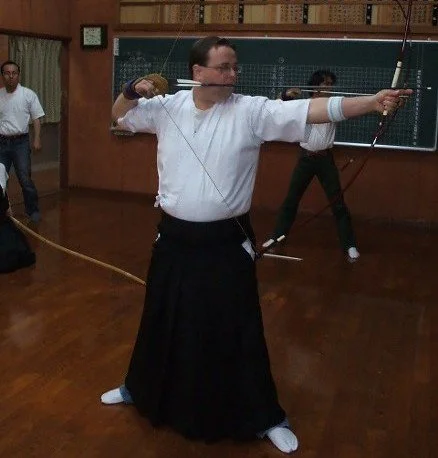
Corey practicing kyudo in Tamana.
When I asked Corey about his most impactful memories, he shared with me a story of his time joining the kyudo, Japanese archery club. While volunteering at a soccer tournament during his JET years, he heard the sounds of the bows and arrows. He peeked into the gym and saw the students practicing. Corey asked the kyoto-sensei about joining, but the teacher in charge of the club refused, thinking that he would not seriously train and would quit soon after. But Corey didn't give up. He convinced the teachers that he was serious and to let him train. So without missing a day, Corey trekked across town after school each day to practice. He didn't even touch a bow for the first month, only practicing wrist movements. But his persistence paid off, eventually being allowed to use the bow and arrow. He continued on during his three years of JET, where he eventually joined a dojo, competed in tournaments, and achieved the shodan rank. He is the only foreigner with his name on the wall of the Tamana Kyudo dojo. And he credits the practice with teaching him discipline, calmness, and techniques such as meditation, which are still relevant in his life today.
Corey built lasting connections with the community around him, which helped him through the challenges of the JET experience. He built character through learning how to handle personal losses and missing things back home while abroad--something anyone who has lived abroad can relate to. His JET experience helped to build the foundation, but his journey was far from over.
After JET, he took a job at a small school in the Philippines and moved there. He wanted to stay in Asia but see a different culture, and he ended up meeting his wife there. After this he taught in Thailand at a Thai-Japanese school, which he was invited to by his old kyoto-sensei from his time on JET. Since there were teachers of many nationalities, his former vice-principal was struggling a bit with navigating the workplace environment and called on Corey to help him be a bridge between the Japanese teachers and the others.
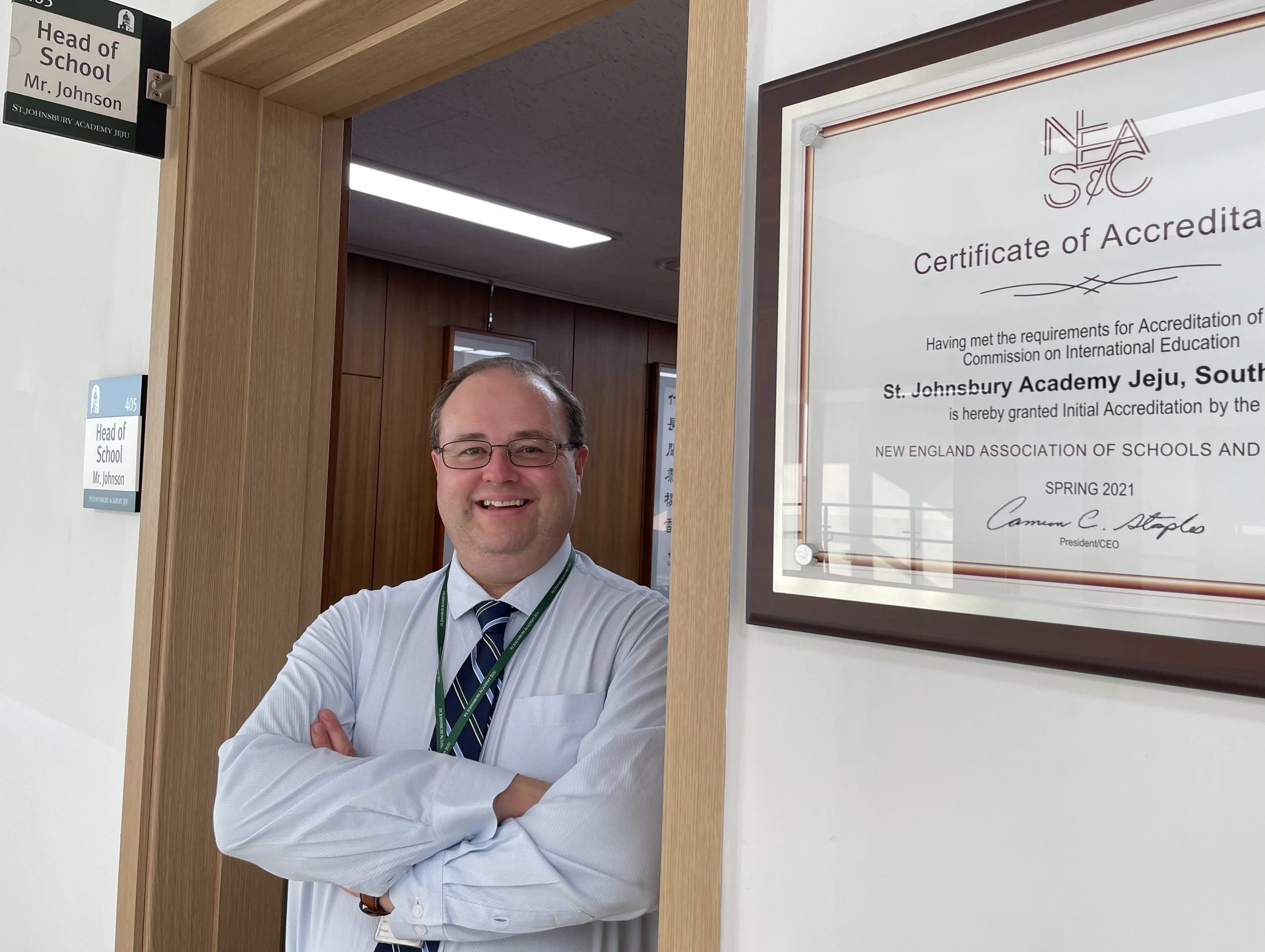
Corey standing outside his office at St. Johnsbury Academy in Jeju, South Korea.
Corey reiterated that this cultural bridge is really what the JET Program is about, and having that experience helped him to utilize these skills in his professional life. After his stint in Thailand, Corey returned to the Philippines for a bit before heading to Kazakhstan and then to China, where he founded two schools. He was contacted by the owner of the first school to create the curriculum, hire the teachers, and recruit the students. His international experience helped him create the international curriculum and establish an environment where students were able to succeed and head to universities around the world. The school he founded in Chengdu, China grew rapidly because of that experience, years later he was contacted by another school to help start their international division. The school became very popular and is still going strong today. Currently, Corey is the Head of School at St. Johnsbury Academy Jeju in South Korea, where he has been for the last 6 years.
When I asked Corey about his advice for JETs, both incoming and leaving, he said that he didn't think his advice was much different. He hoped that incoming JETs came with an open mind and a willingness to embrace the culture in their own way. He encouraged people to find their path, and to get involved with the aspects of Japanese culture that interest them, but also push themselves, just like Corey did with kyudo. He also stressed the idea of community integration, and how one is not only a member of the school, but the larger community as well. This is something he's carried with him, always making sure that the school he works at becomes the cornerstone of the local community.
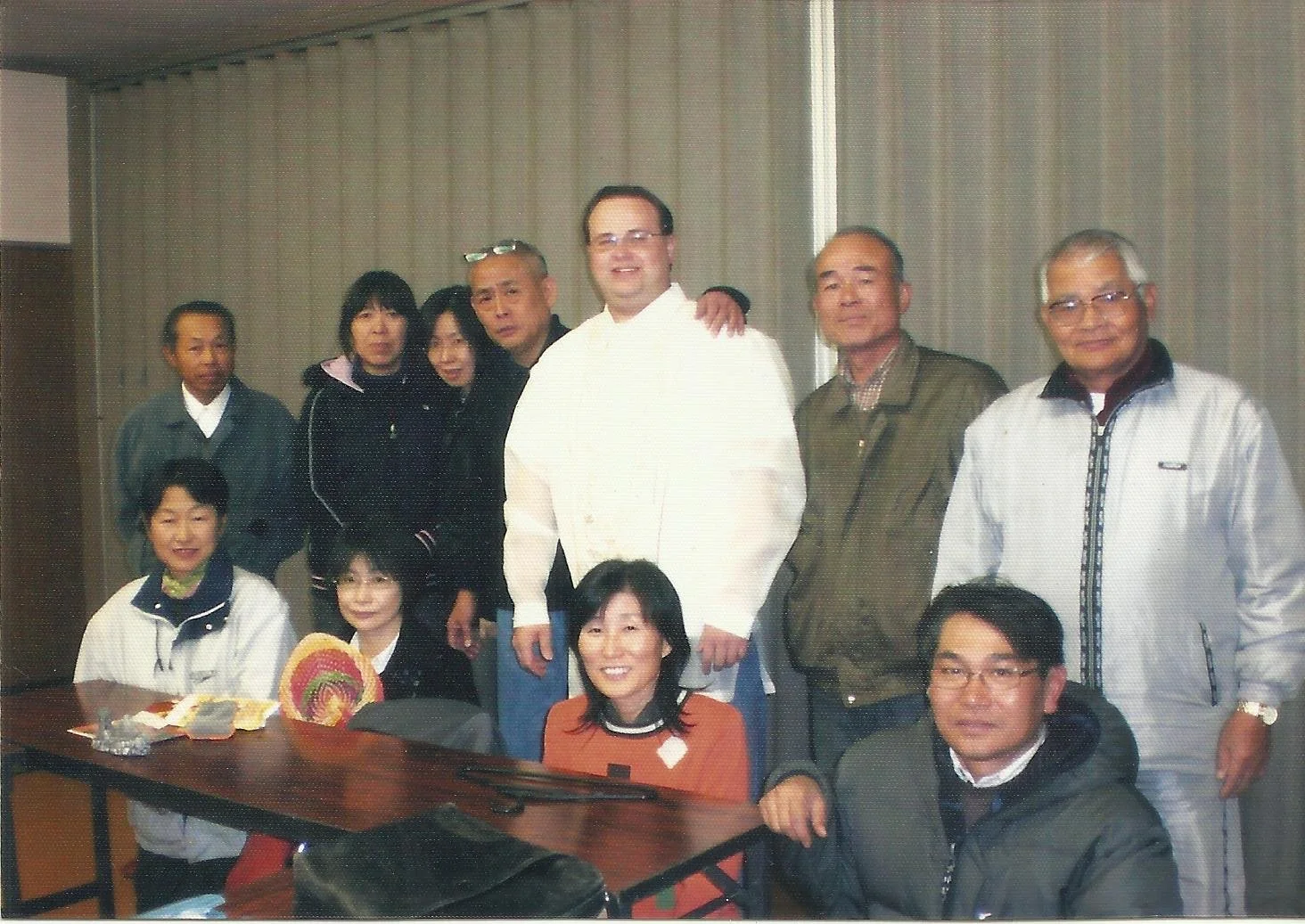
Corey with this eikaiwa class in Tamana.
As for departing JETS, he hopes that you will take the connections and memories with you. He said that while it can sometimes be difficult, you have to learn to translate your best experience into your next phase, to frame your JET experience as a cultural liaison and ambassador and not only as an English teacher. The mark that JETS leave on their community matters, and Corey pointed out that the job of the JET is to connect the younger generations of Japanese people and the wider world through bridging language and culture.
Corey is still in contact with former students and those bonds have lasted throughout the years and through many roles in many countries. He noted that it is a serious responsibility to represent one's country and culture well, but when done right, it is one of the most powerful things we can do in our role as JET and JET alumni.
About Corey Johnson (Kumamoto, 2006-2009)
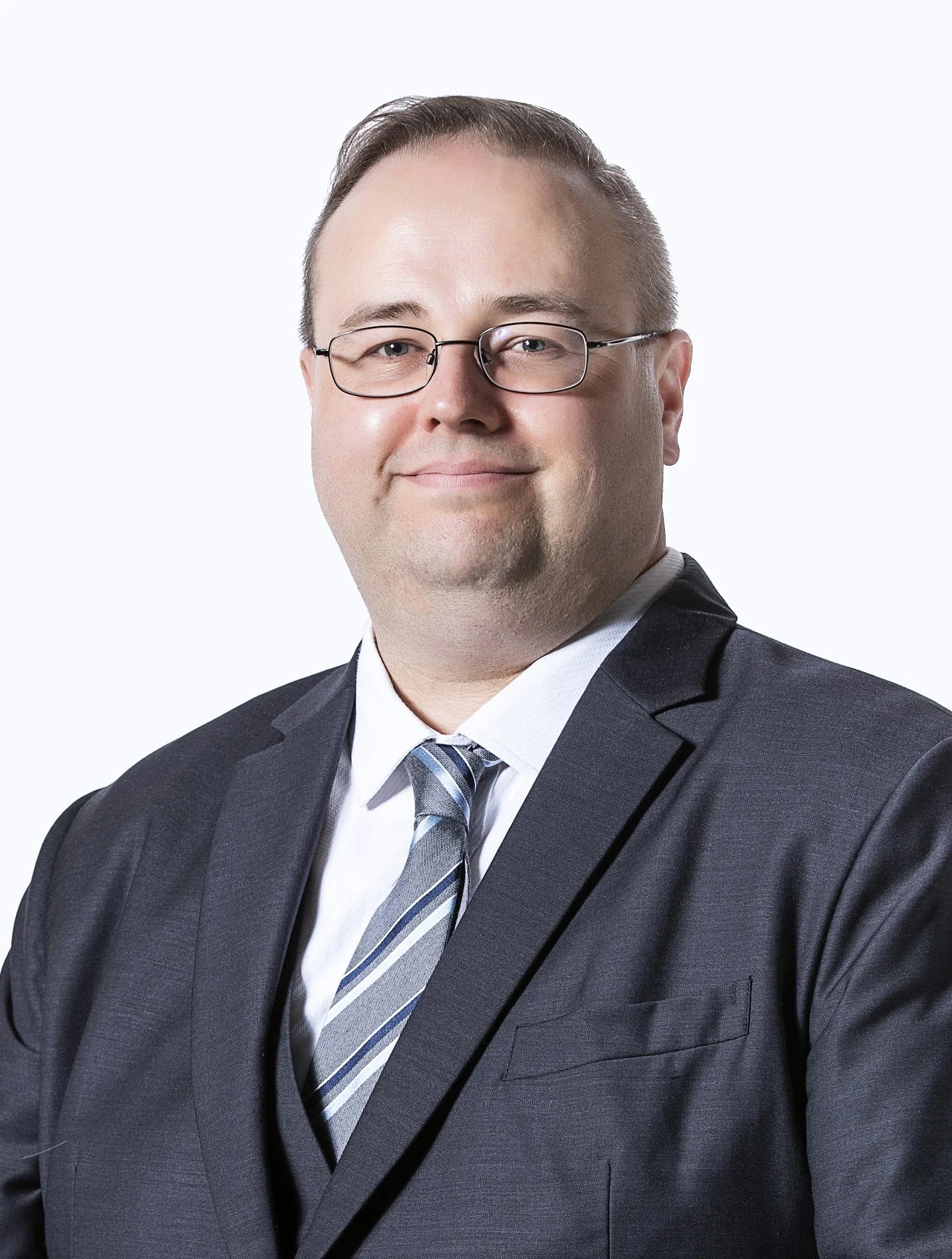
Corey Johnson holds a BS in Secondary Education from Northwest Missouri State University, a Master’s Degree in Educational Leadership from Columbia College, Missouri, and an Educational Specialist Degree (EdS) in Superintendency and Educational Leadership from Northwest Missouri State University. He is a member of the Alpha Chi National College Honor Society for outstanding academic achievement and the Alpha Theta National Honor Society for achievement in the field of history. Mr. Johnson holds U.S. principal certification for grades 7–12 and teaching certification for grades 9–12.
Mr. Johnson brings over 21 years of experience as both a teacher and school leader in the United States, Korea, the Philippines, Thailand, Kazakhstan, China and Japan through the JET Programme. His professional background spans multiple curricula, including Advanced Placement (AP), A-Levels, and the International Baccalaureate (IB). He has served as the founding principal of two schools in China. Since 2022, Mr. Johnson has been the Head of School at St. Johnsbury Academy Jeju, where he is dedicated to building one of Korea’s leading day and boarding college-preparatory schools.
The Senpai Spotlight series features JET alumni from the US who have made successful careers for themselves in various fields—with the goal of inspiring JETs and JET alumni to pursue their own dreams while also offering some words of advice only a senpai could know.
If you, or someone you know, would like to be featured as a Senpai Spotlight, please reach out to us at contact@usjetaa.org.

This edition of Senpai Spotlight was written by Marco Blasco, a writer and editor based in snowy northern Japan. Originally from America, his interest in Japanese culture and religion brought him to Japan through the JET Program in 2021, where he has made a second home for himself.
